How Human Skills Help Kids Navigate Big Academic Transitions

Change is always hard. For adults, major life transitions can feel disorienting, even with decades of experience navigating the world. For kids, the transitions they face can feel seismic. Starting full-day school, moving from elementary to middle school, and stepping into high school are just a few of the major transitions children face, not to mention the ones that are unique to individual kids. In these moments, the familiar routines they’ve relied on shift suddenly, the social landscape changes, and what once felt familiar no longer does.
Making big transitions feel manageable for students requires a lot of preparation and foresight, and many schools are right to focus on preparing kids for the academic and practical challenges that come with change. These challenges can include shifts in academic rigor and class schedules, navigating a new building, or having the right supplies on hand.
But in addition to the practical, what often determines how well a student navigates a major transition is the human skills they have in their toolbox. Skills like emotion regulation, communication, resilience, and goal-setting help students adapt, not just externally but internally, help them connect with their peers and teachers, and help them find their footing when everything around them is changing.
Understanding what those skills are and how to help students develop them is one of the most important things educators and adults can do to support kids through life’s biggest changes.
Understanding transitions from a human skills perspective
What makes transitions so hard? At their core, transitions ask kids to do several difficult things at once: manage unfamiliar emotions, build new relationships, meet new expectations, and let go of the comfort of what they already know. Even when a transition is a positive, exciting one, it still requires significant cognitive and emotional work.
According to research, human skills are what make that work possible. Skills like self-awareness and emotion regulation help kids recognize and name what they’re feeling during times of uncertainty. Communication helps them ask for help when they need it. Resilience helps them flex and bounce back when the transition gets harder than expected. Executive functioning, which includes things like planning, organizing, and managing time, helps them stay on top of new academic and social demands.
Adults play a critical role in this process, not by managing every step for kids but by creating environments where human skills can be practiced and where kids feel safe enough to struggle. The goal isn’t to eliminate the discomfort of transition, because some discomfort is always part of growth. The goal is to make sure kids have the skills and support to move through it.
Transition 1: Entering Kindergarten
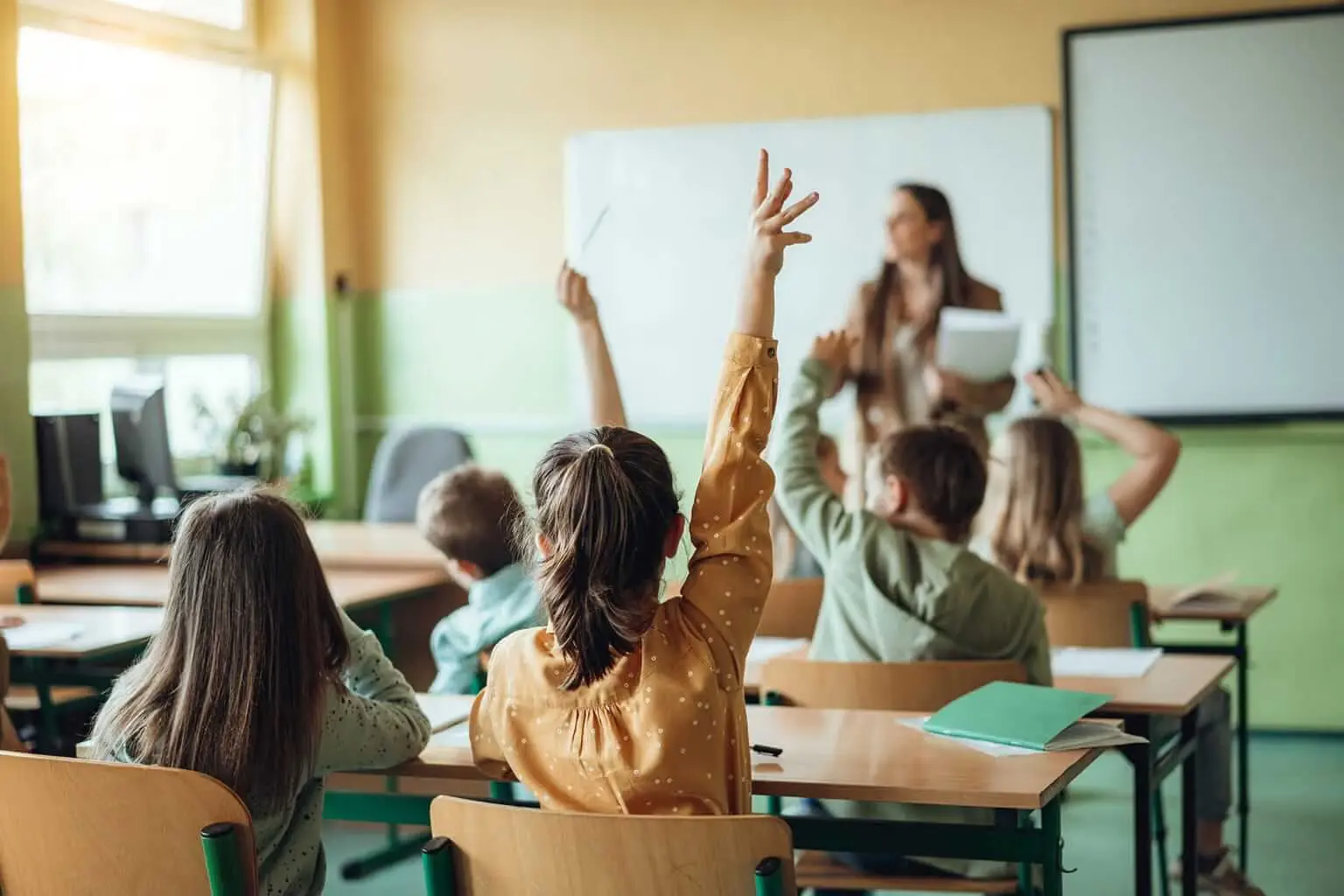
The transition into Kindergarten is unlike almost any other in a child’s life. For many kids, it’s the first time they’re spending long stretches of time away from home, navigating a large group of peers, and managing their own needs independently. For many young learners, it can be a real blast. But it can also be overwhelming.
For kindergartners, emotion regulation is at the top of the list of essential human skills. A child who can manage frustration, tolerate not getting their way immediately, and recover from small upsets is better positioned to focus, participate, and connect with peers. Communication, or the ability to express a need, ask a question, or tell a teacher something is wrong, is equally essential.
There are practical ways to build these skills before the first day arrives. Families and parents can visit the school and meet the teacher ahead of time so the environment feels more familiar. In the classroom, teachers can read stories with characters who start something new and feel nervous, and then they can talk about how those characters navigate their feelings. These conversations give kids language to express how they’re feeling and help them understand they’re not alone.
Kindergarten transition tip: Offer genuine reassurance rather than minimizing their worries. Frame school as an exciting place where interesting things happen, where they’ll make friends, where they’ll discover things they love. How adults talk about transitions shapes how kids feel about them.
Transition 2: Elementary to middle school
The jump from elementary to middle school is one of the most complex transitions kids face, requiring both academic and emotional readiness. It’s a shift in almost every dimension of a student’s experience. Suddenly they’re navigating a larger school with multiple teachers, each with different expectations and styles. Academic responsibility increases. Social complexity skyrockets. Kids become acutely tuned in to where they fit, how they’re perceived, and who their people are.
The human skills that matter most during this transition are the ones that help students manage that complexity. Self-awareness helps kids understand their own emotional responses to new social dynamics. Organization and executive function help them keep up with a more demanding academic workload. Communication helps them navigate multiple types of relationships, with teachers, peers, and family.
Feeling lost or overwhelmed is common, as is social anxiety. The increased workload catches many students off guard, particularly those with less developed executive functioning skills.
For educators, supporting students through this transition means meeting them where they are. Planning tools like agendas, checklists, and simple organizational systems can make a huge difference for students who suddenly have five teachers instead of one. Encouraging involvement in activities or clubs helps kids find their social footing in a new environment.
Middle school transition tip: Adults can actively normalize mistakes as an important part of growth. Middle school is full of both small failures and wins, and the way kids interpret those experiences matters enormously.
Transition 3: Middle school to high school
The transition into high school brings a new and sometimes daunting weight: the future starts to feel real. Course selections matter, and grades carry more consequence. Questions about identity become louder and more urgent. High school social structures are often more complex than anything students have experienced before.
The human skills most essential to this transition reflect those higher stakes. Goal-setting becomes critical. Students who can set meaningful goals and stay connected to their own sense of purpose are better equipped to navigate high school’s demands. Responsible decision-making matters more than ever when adults are stepping back and giving students more freedom. Resilience is tested regularly through academic pressure, social challenges, and the inevitable setbacks of a more demanding environment.
A stable self-identity serves as an anchor when everything else feels uncertain.
High school transition tip: Supporting high schoolers means helping them learn to work through challenges independently. Teaching goal-setting frameworks gives students a tool they’ll use long after graduation. Normalizing course correction takes pressure off the idea that every decision has to be perfect. And creating regular opportunities for reflection helps students make meaning out of their experiences.
A through-line of human skills
Every transition a student navigates is different. But across all of them, the students who fare best are those who possess the strong human skills to adapt. In addition to academic preparation, students who can regulate their emotions, communicate their needs, set goals, and bounce back when things don’t go as planned are the ones who truly thrive in transitions.
That’s why investing in Human Skills™ instruction is one of the most practical ways educators can support students throughout major academic transitions. Second Step® programs help students strengthen these skills throughout their school years so that when the big changes come, they have exactly what they need to move through them with confidence.
If you’d like to learn more about how Second Step programs equip kids to navigate major academic transitions successfully, you can schedule a conversation with our expert team today.
Recent Posts
How Implementation Data Is a Window into What Works—and What Doesn’t
Always On but Never Connected: The Digital Divide Between Students