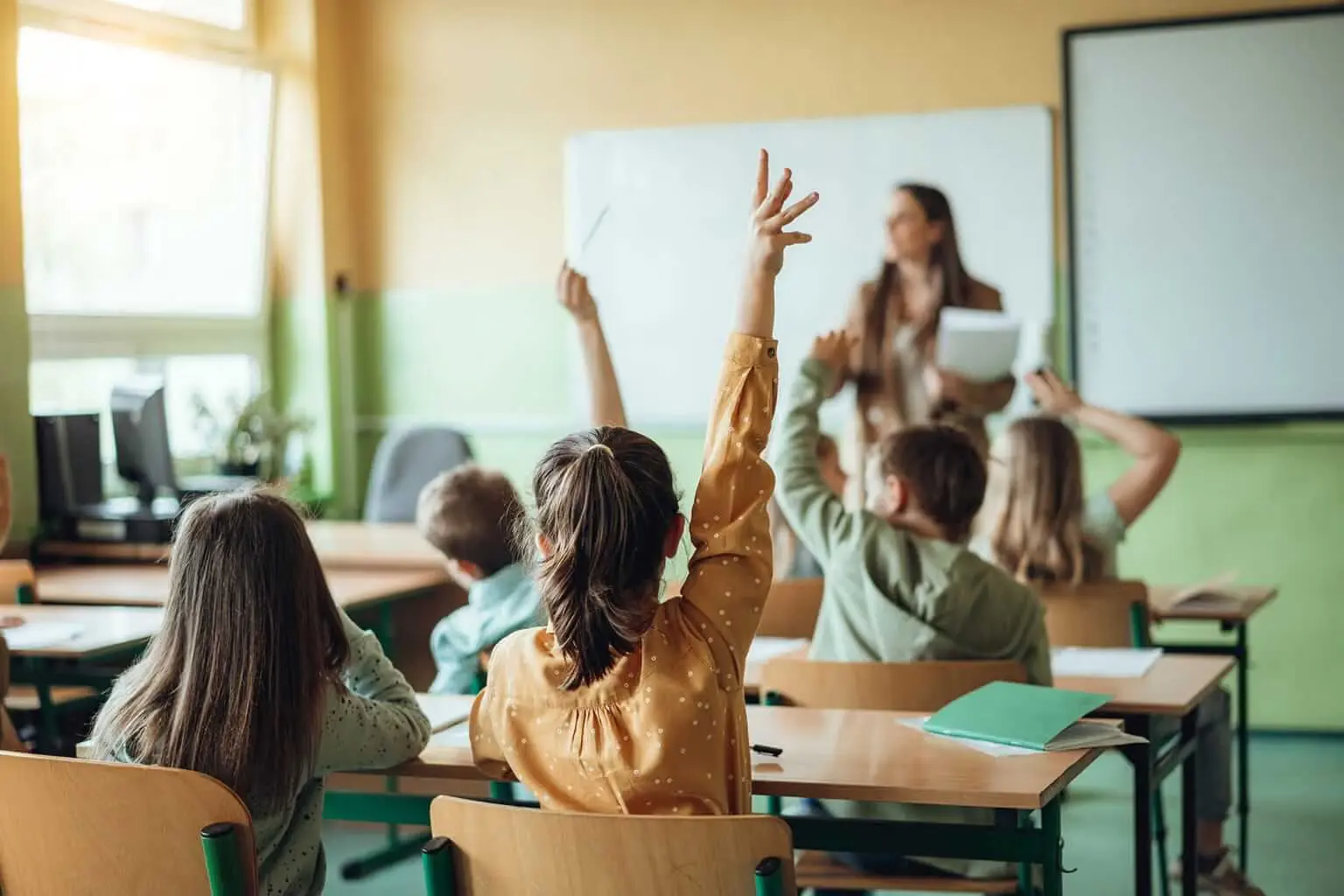
How Early Learning Sets Children Up for Lifelong Success

The early years of school aren’t a warm-up. They’re where children begin forming the skills that shape how they learn, build relationships, and see themselves as capable members of a classroom community.
And that’s when the real work begins.
Before children can fully engage with academics, they need to know how to manage big feelings, take turns, solve small conflicts, and recover from frustration. These foundational abilities influence everything that follows, from classroom participation to long-term engagement in school.
For educators and district leaders, this makes early learning more than an entry point. It’s where the trajectory begins.
What young children are really learning
In early childhood classrooms, learning goes far beyond letters and numbers.
Children are learning how to recognize their emotions and calm their bodies. They’re learning how to listen when others speak and how to express their needs with words instead of reactions. They’re learning how to build friendships, repair hurt feelings, and work through disagreements.
They’re also developing executive-function skills—such as focusing attention, following directions, and managing impulses—that make academic learning possible.
Educators see these moments unfold every day: a disagreement over a toy, a difficult transition between activities, a child overwhelmed by frustration.
These are not interruptions from learning. They are the learning.
Why educators need structured support
Early childhood educators are already doing extraordinary work. They build classroom communities from the ground up, often while supporting a wide range of developmental needs.
But relying only on teachable moments can create inconsistency. Without shared language and predictable routines, children may struggle to apply skills across settings.
That’s why structured, developmentally appropriate programs matter. When human skills are taught intentionally and reinforced consistently, educators can spend less time managing disruptions and more time guiding growth.
This consistency also supports alignment across classrooms and initiatives. Early learning becomes part of a larger, cohesive approach to student well-being and school climate.
The classroom impact is apparent
When young children are explicitly taught how to manage emotions, solve problems, and work together, the effects are visible:
- Transitions become smoother.- Play becomes more cooperative.- Students have a shared language for navigating conflict.- Classrooms feel calmer and more connected.
These shifts create space for deeper academic engagement. Children who can regulate their emotions and collaborate with peers are better positioned to participate, persist, and learn.
The benefits don’t stop in PreK. They carry forward into Kindergarten and beyond, strengthening the foundation for future success.
Human skills are at the heart of school readiness
School readiness is often framed in academic terms, but readiness is also relational and emotional.
Children need opportunities to practice empathy, communication, resilience, and problem-solving in ways that match their developmental stage. These skills aren’t absorbed automatically. They require modeling, repetition, and guidance.
When human skills instruction is woven into daily routines, such as during circle time, transitions, play, and reflection, it becomes part of how a classroom functions, not an add-on.
A consistent, evidence-based approach helps ensure every child has access to that support.
Supporting early learners with intention
The Second Step® Early Learning classroom kit is designed to help educators strengthen human skills in ways that fit real classrooms.
Lessons are interactive and developmentally appropriate, giving young children meaningful opportunities to practice emotion regulation, communication, and problem-solving. The program provides shared language and structured guidance while remaining flexible enough to meet the needs of diverse learners.
For leaders, this means early learning classrooms are not operating in isolation. They’re part of a broader, aligned effort to build strong school communities from the start.
Investing early strengthens schools for years to come
When schools prioritize human skills instruction in the earliest grades, they’re doing more than supporting young children in the moment. They’re shaping how students experience school: as a place where they belong, where they can manage challenges, and where they can grow.
Strong foundations lead to stronger classrooms. Stronger classrooms contribute to stronger schools. And stronger schools create stronger communities where students can reach their fullest potential.
Want to strengthen human skills at your school?
With the right support, early learning classrooms can intentionally strengthen the human skills that shape long-term success. Explore Second Step Early Learning, and request a free consultation to learn how our programs can meet your school’s or district’s unique needs.
Recent Posts
How Implementation Data Is a Window into What Works—and What Doesn’t
Always On but Never Connected: The Digital Divide Between Students