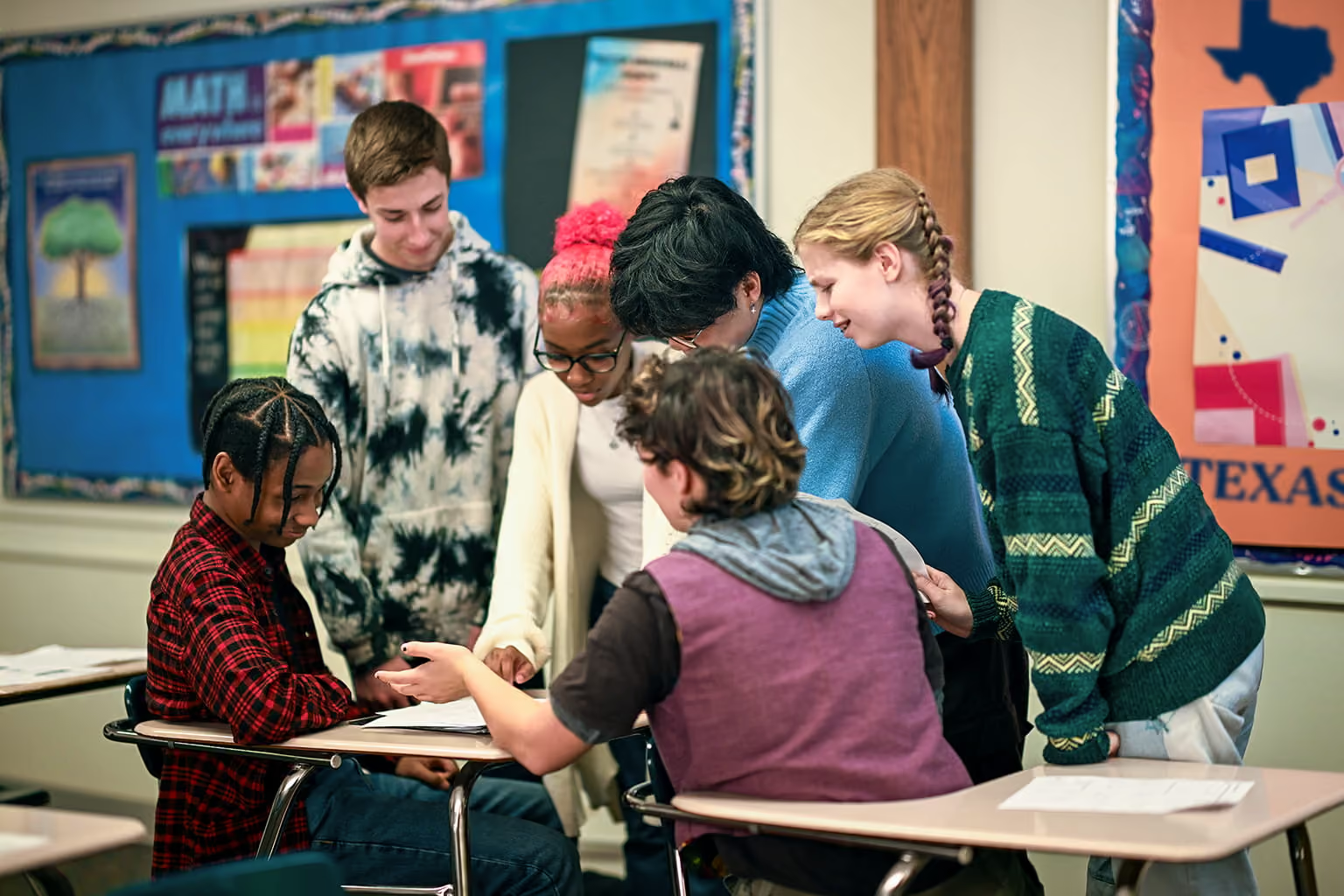
5 Ways to Foster Human Skills in Extracurricular Activities
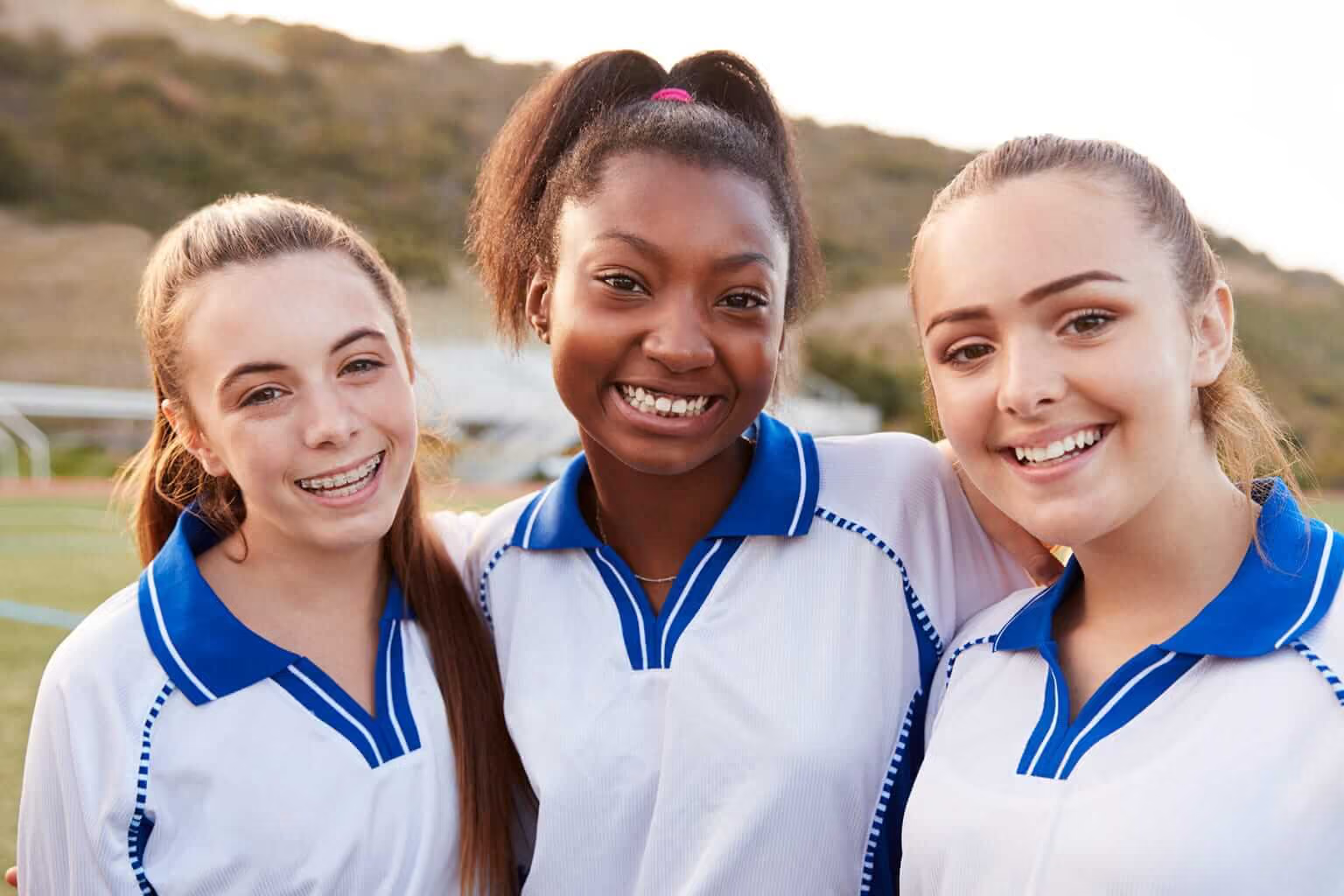
Extracurricular activities are an important part of the academic experience for students at every level. Beyond the classroom, activities like sports, student council, and clubs are where many kids spend time socializing, continuing to learn, and having fun.
Extracurriculars are also a great place for students to strengthen the human skills that benefit them back in the classroom, in life, and in their extracurricular of choice. Whether they’re honing their debate skills or auditioning for the spring musical, extracurriculars present ample opportunities to build skills like self- and social-awareness, relationship-building, confidence, and many more.
Just like in the classroom, students need instruction and structured opportunities to grow these skills. It doesn’t happen by accident. Here are five ways to foster human skills in extracurricular activities.
1. Prioritize connection and communication
In extracurriculars, students get the chance to foster deep connections and friendships while strengthening their communication skills. While classroom settings require students to communicate as they pursue shared academic objectives, extracurriculars allow for natural yet focused connection as they pursue a shared goal. By emphasizing communication and connection with intentionality from the start, coaches, club leaders, and advisors can help kids become better communicators as they build meaningful, long-lasting connections.
Extracurricular human skills tip: Build in a brief check-in at the start of each session—something as simple as a one-word feeling prompt or a quick share-out. It signals to students that connection matters here, not just performance, and it sets the tone for open communication throughout.
2. Encourage reflection
Reflection is an important part of solidifying human skills. Creating intentional time for structured reflection gives kids the chance to slow down, to look back on what they’ve just experienced or learned, and to look ahead at what’s to come. Reflection gives kids the opportunity to “stamp” what they’ve just learned—a common teaching method in classrooms that can also work great for strengthening human skills.
In an extracurricular setting, reflection doesn’t have to feel like homework. It can be a conversation, a quick journal entry, or even just a single question posed to the group.
Extracurricular human skills tip: Block out structured reflection time (5–10 minutes is plenty) and guided reflection questions for kids at the beginning or end of each extracurricular session.
3. Provide structure—but not too much
One of the great things about extracurricular activities is they’re usually less rigorous and structured than the school day. Students at every level look forward to these lower-pressure opportunities to connect with their peers and pursue an interesting new activity, skill, or hobby.
But that doesn’t mean extracurriculars should always be unstructured. The key to creating an environment that is conducive to strengthening human skills is striking a balance between structured and unstructured time. In the structured time, students continue to strengthen skills like executive functions and problem-solving, while unstructured time allows for human skills like social awareness and empathy to develop naturally.
Extracurricular human skills tip: Set one primary objective for each extracurricular session, such as blocking a scene, staging a debate, or creating a campaign poster. Then designate about 75% of time to pursuing that objective. Leave the extra 25% for unstructured time where students can do their own thing and then come back together to complete their daily objective.
4. Set clear, ambitious goals
Extracurriculars are a perfect place to practice goal-setting, a key human skill that benefits students in every area of their lives. These settings give students opportunities to set goals that aren’t just academic. The goals can span a wider spectrum. They can be social, personal, or achievement-based.
For example, a student joining a new club can set a goal to make three new friends by the time the club concludes. They can set another to try something in the club that scares them, like singing on stage or learning a challenging dance. Finally, they can set a goal to reach a meaningful achievement, like making a sports team or fulfilling a community service requirement. No matter the activity, extracurriculars are the perfect opportunity for kids to set, pursue, and reach a range of meaningful goals.
Extracurricular human skills tip: At the start of a new season or club cycle, have students write down one social goal, one personal challenge goal, and one achievement goal. Revisit those goals together midway through and at the end. It gives kids a tangible sense of growth and helps the goal-setting skill stick.
5. Celebrate effort, not just outcomes
In competitive or performance-based extracurriculars, it’s easy for students to measure their success by results alone. Did we win the game? Did I get the lead role? But one of the most powerful skills students can develop is the ability to recognize and take pride in their own effort, growth, and resilience—regardless of the outcome.
When coaches and advisors make a habit of acknowledging the hard work, persistence, and improvement they see in students, it reinforces a growth mindset and builds the kind of intrinsic motivation that carries kids far beyond the extracurricular itself.
Extracurricular human skills tip: Make recognition a regular part of your sessions. At the end of each week or meeting, call out one or two specific examples of effort or growth you observed. Specific, effort-focused praise teaches kids what to value in themselves and each other.
Anything but extra: Strengthening human skills in every environment
The human skills students develop in extracurricular activities—such as how to connect, reflect, set goals, and stay resilient after setbacks—are the same skills that help them thrive in the classroom, in relationships, and in life. With intentionality, extracurriculars can be one of the most powerful places to grow them.
To learn about how Second Step® human skills programs can support students in every learning environment, get in touch with us today.
Recent Posts
Always On but Never Connected: The Digital Divide Between Students
5 Tips to Maximize Student Outcomes Through Second Step® Program Data