From Tech-Savvy to Human-Smart: Empowering Students in an AI Era
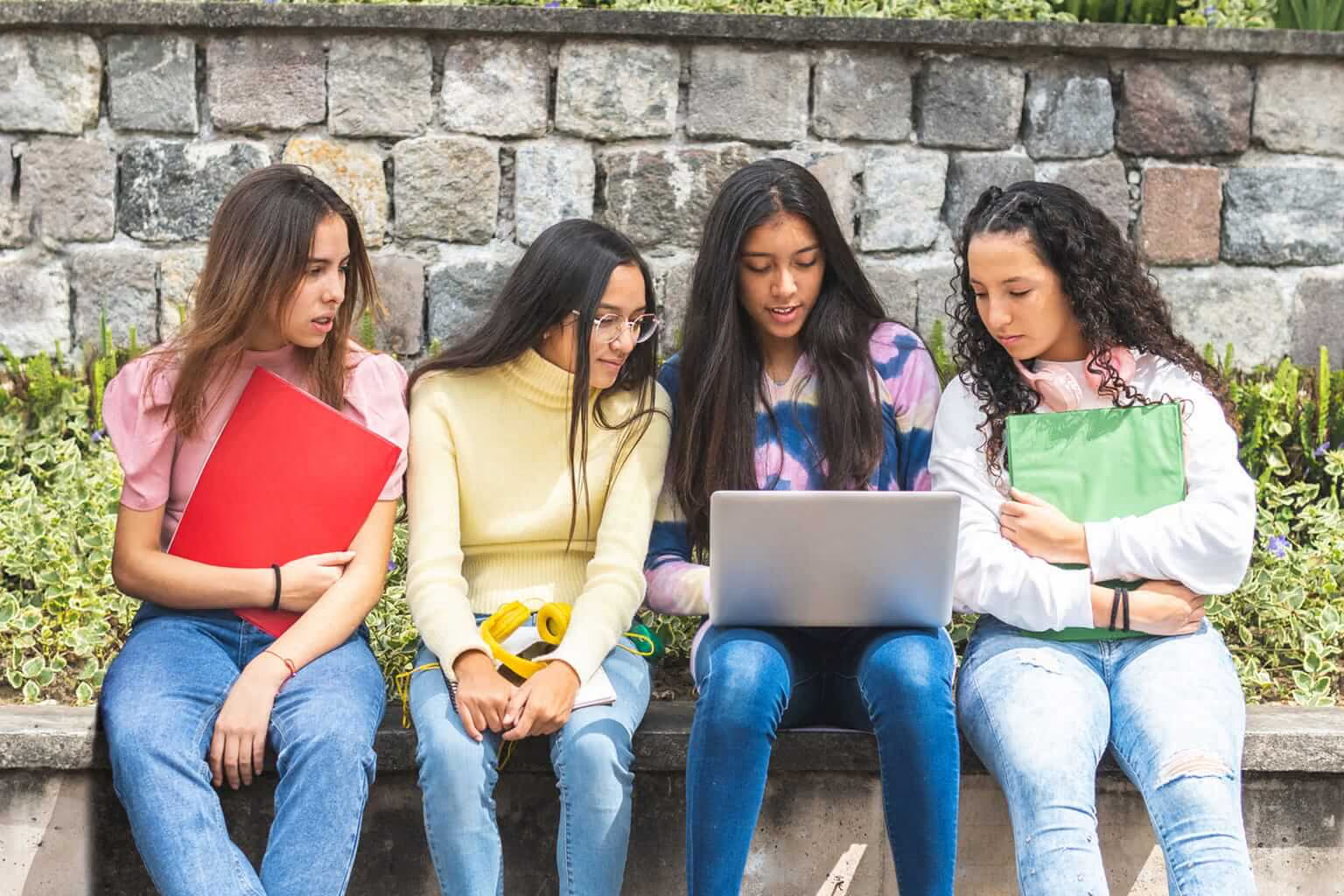
Students today can explore apps, edit videos, prompt AI tools, and switch between digital platforms faster than many adults. But being tech-savvy and being prepared for life in an AI-powered world are not the same thing.
As artificial intelligence becomes part of how students learn, communicate, and make decisions, schools are facing a big question: What do students need in order to navigate an AI-powered world confidently and responsibly?
The answer isn’t less technology. The answer is helping students build the skills technology can’t replace:
- Creativity
- Empathy
- Critical thinking
- Communication
- Resilience
- Ethical decision-making
These are the skills that help young people thrive, not just alongside AI but in a world increasingly shaped by it.
AI is changing the skills students need
AI can generate essays, summarize information, answer questions, and even mimic human conversation. That creates exciting opportunities for learning, but it also raises new challenges for students.
Students are faced with:
- Misinformation and AI-generated content
- Pressure to constantly perform online
- Questions about originality and authenticity
- Increased social comparison and digital dependency
- Uncertainty about future careers and human relevance
In many classrooms, educators are already seeing the impact. Students may know how to use AI tools, but they struggle to evaluate whether information is trustworthy, to communicate thoughtfully, or to persist through frustration without immediately outsourcing the work.
Technology skills alone are not enough. Students need judgment, self-awareness, and the ability to think beyond the first answer an algorithm gives them.
Human skills are the real differentiator
As AI takes over more routine tasks, distinctly human capabilities become even more valuable.
Those include:
- Collaborating effectively with others
- Understanding emotions and perspectives
- Thinking creatively and solving novel problems
- Making ethical decisions
- Adapting to change
- Staying motivated through challenges
Human skills like these support academic achievement, conflict management, workplace readiness, and digital well-being. They also help students develop confidence in a world that often feels fast-moving and unpredictable.
Research continues to reinforce the importance of these human skills. A growing body of evidence shows that students can benefit when schools intentionally teach skills like emotion regulation, problem-solving, and relationship-building alongside academics.
For example, independent studies from WestEd involved more than 25,000 students across multiple states, and they found that schools faithfully implementing Second Step® K–8 digital programs had measurable improvements in school climate, belonging, and the quality of student-teacher relationships. These are not soft outcomes. They’re the conditions that make learning possible in the first place.
In an AI-driven world where students are constantly navigating digital pressure and automated information, those conditions matter more than ever. Belonging, connection, and trust help keep students grounded enough to think critically, engage thoughtfully, and stay resilient when technology accelerates faster than their sense of control.
These human skills aren’t just “nice to have.” They’re foundational.
Creativity still matters, maybe more than ever
One common misconception about AI is that it will replace creativity. In reality, creativity is becoming more important, not less important.
AI can generate content quickly, but students still need imagination, curiosity, and original thinking to guide how those tools are used.
The students who thrive won’t simply know how to prompt a tool. They’ll know how to:
- Ask meaningful questions
- Combine ideas in new ways
- Think critically about outputs
- Add human perspective and lived experience
- Create work with emotional depth and purpose
Creativity is also tied to confidence and resilience. Students need opportunities to experiment, fail, revise, and discover their own voice, especially in environments where instant answers are always available.
That kind of growth doesn’t happen through technology alone. It happens through supportive relationships, reflective learning, and skill-building experiences that encourage students to think for themselves.
Empathy and connection can’t be automated
At a time when digital communication dominates so much of students’ lives, human connection is a vital differentiator.
AI can simulate conversation, but it cannot replace genuine empathy, emotional understanding, or meaningful relationships.
Students still need to learn how to:
- Navigate conflict respectfully
- Listen actively
- Read social cues
- Collaborate across differences
- Build healthy relationships online and offline
These skills are the cornerstone for classrooms, workplaces, and communities. They also help students navigate increasingly complex digital environments where misunderstandings, online pressure, and social isolation can easily take hold.
Schools play a vital role in creating spaces where students feel seen, heard, and connected, not just academically supported.
Building resilience in a world of constant change
One of the biggest realities students face today is uncertainty.
Technology is evolving rapidly. Careers are shifting. Information never stops moving. Many students are growing up in a world where the future feels difficult to predict.
That’s why resilience may be one of the most important skills schools can help students build.
Resilience helps students:
- Adapt when things change
- Recover from setbacks
- Manage stress and frustration
- Stay grounded amid constant digital noise
- Approach challenges with confidence
But resilience is not about pushing through without support. It’s about helping students develop coping strategies, emotional awareness, and trusted connections that allow them to navigate challenges in healthy ways.
These are lifelong skills students will carry far beyond the classroom.
Preparing students for an AI future starts with human skills development
Preparing students for the future is no longer just about teaching them how to use technology. It’s about helping them become thoughtful, capable humans in a technology-filled world.
The schools leading the way are recognizing that human skills development and academic success are deeply connected. They’re creating learning environments that support critical thinking, empathy, responsible decision-making, and emotional well-being alongside digital literacy.
Because in an AI era, the most future-ready students won’t simply be the most tech-savvy. They’ll be the most human-smart.
Want to help students thrive in a digital age?
Explore Second Step human skills programs, including our all-new Digital Well-Being specialized unit, to help students develop the human skills they need to think critically, engage responsibly, and stay grounded in an AI-shaped world.
You can also request a free consultation to discover how our programs can support your students’ unique needs and prepare them to navigate school, relationships, and digital life with confidence.
Recent Posts

How Implementation Data Is a Window into What Works—and What Doesn’t
Always On but Never Connected: The Digital Divide Between Students