
Character Values Are Important. Human Skills™ Instruction Helps Them Stick.

Schools have long helped students build character, with educators often teaching responsibility, integrity, perseverance, and respect.
Today’s districts continue that work, often through formal character education initiatives designed to help students succeed in school, relationships, the workplace, and their communities.
But there’s an important question at the heart of every character education effort: How do students move from knowing what the right thing is to actually doing it?
The answer is strengthening human skills.
Character is the destination. Human skills are the path.
Character education focuses on the values and traits schools want students to develop. Human skills instruction focuses on teaching students the practical skills they need to put those values into action every day.
At its core, character education helps define specific traits that are important for lifelong success.
Human skills are the tools to bring those character traits, and many other critical competencies, to life.
Students may know that honesty is important, but emotion regulation and responsible decision-making skills help them tell the truth when they’re under pressure.
Students may want to demonstrate responsibility, but they still need self-management skills to stay organized, manage their time, and follow through on commitments.
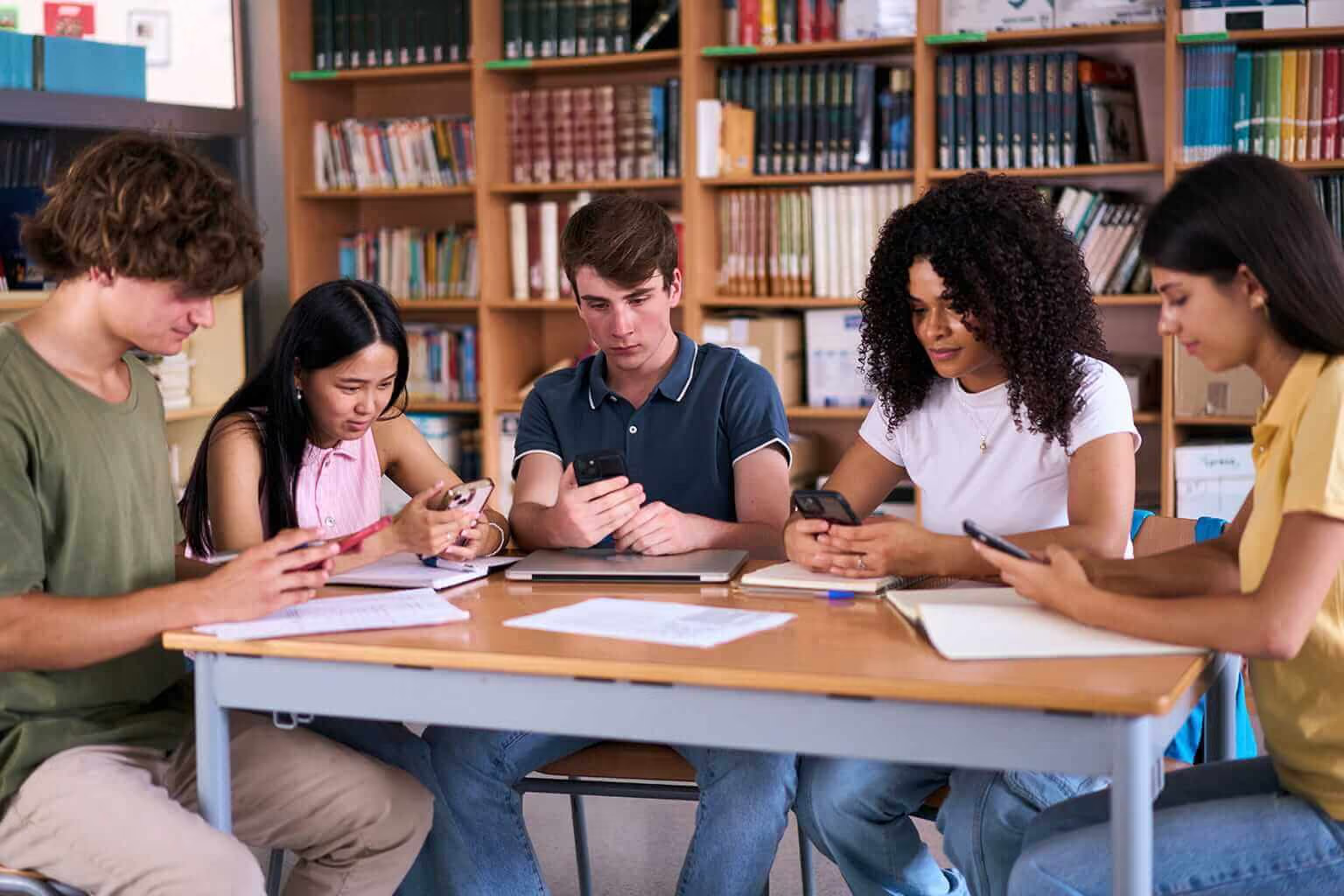
They may want to find a healthier balance between video games and schoolwork, but executive functions, growth mindset, and responsible decision-making skills enable them to set priorities and make choices that support their goals.
Character and human skills aren’t competing approaches. They work together to help students turn values into everyday actions.
The connection between character strengths and human skills
Here’s what that connection can look like in practice:
- Character strength → Supporting human skill
- Respect → Social awareness
- Responsibility → Self-management
- Integrity → Responsible decision-making
- Compassion → Empathy and relationship skills
- Courage → Self-awareness and self-confidence
When students have both the understanding of what’s expected of them and the skills to navigate challenges, character becomes something they practice rather than something they simply discuss. It becomes part of everything they do: how they learn, how they approach problems, how they handle conflict, and how they build relationships in and out of the classroom.
Why districts are taking an integrated approach
Organizations such as Character.org have increasingly emphasized the importance of connecting character education with explicit instruction in interpersonal and emotional skills.
Its Character and Social-Emotional Development (CSED) framework recognizes that students need both strong values and strong skills to succeed.
Districts are embracing this integrated approach because it allows them to build a consistent foundation across grade levels while supporting academic achievement, strengthening school climate, and helping students navigate an increasingly complex world.
Research continues to reinforce the importance of this work. For instance, independent studies conducted by WestEd found that schools that implemented Second Step® K–8 digital programs with sufficient fidelity saw students improve in areas like attendance, academic motivation and performance, self-management, behavior, and overall school climate.
These outcomes reinforce that what students learn in the classroom doesn’t stay there. Strengthening human skills can shape how they collaborate, communicate, make decisions, and overcome challenges throughout their lives to become responsible citizens.
That’s where an integrated approach can make all the difference, as schools intentionally pair that skill-building with character education.
Character is built one skill at a time
Students aren’t born knowing how to manage frustration, resolve conflict, or navigate difficult decisions.
These abilities are learned, practiced, and strengthened over time.
When schools intentionally teach human skills alongside character education, they help students build the confidence, resilience, and sense of connection they need to flourish in all aspects of life from school to career.
Because character isn’t simply what students believe. It’s what they’re equipped to do.
In our next post, we’ll take a closer look at how Second Step programs put these ideas into practice, helping schools develop the foundational human skills that support character development.
Want to get a head start on strengthening character development?
Explore our evidence-based districtwide solution or request a demo to see how human skills instruction can help students turn values into meaningful skill sets and lasting behaviors.
Recent Posts

Better Problem-Solving Starts with Strong Human Skills

How Implementation Data Is a Window into What Works—and What Doesn’t