
Resource Library

Audience

Type

Topic

Thank you! Your submission has been received!
Oops! Something went wrong while submitting the form.
Showing 100 items
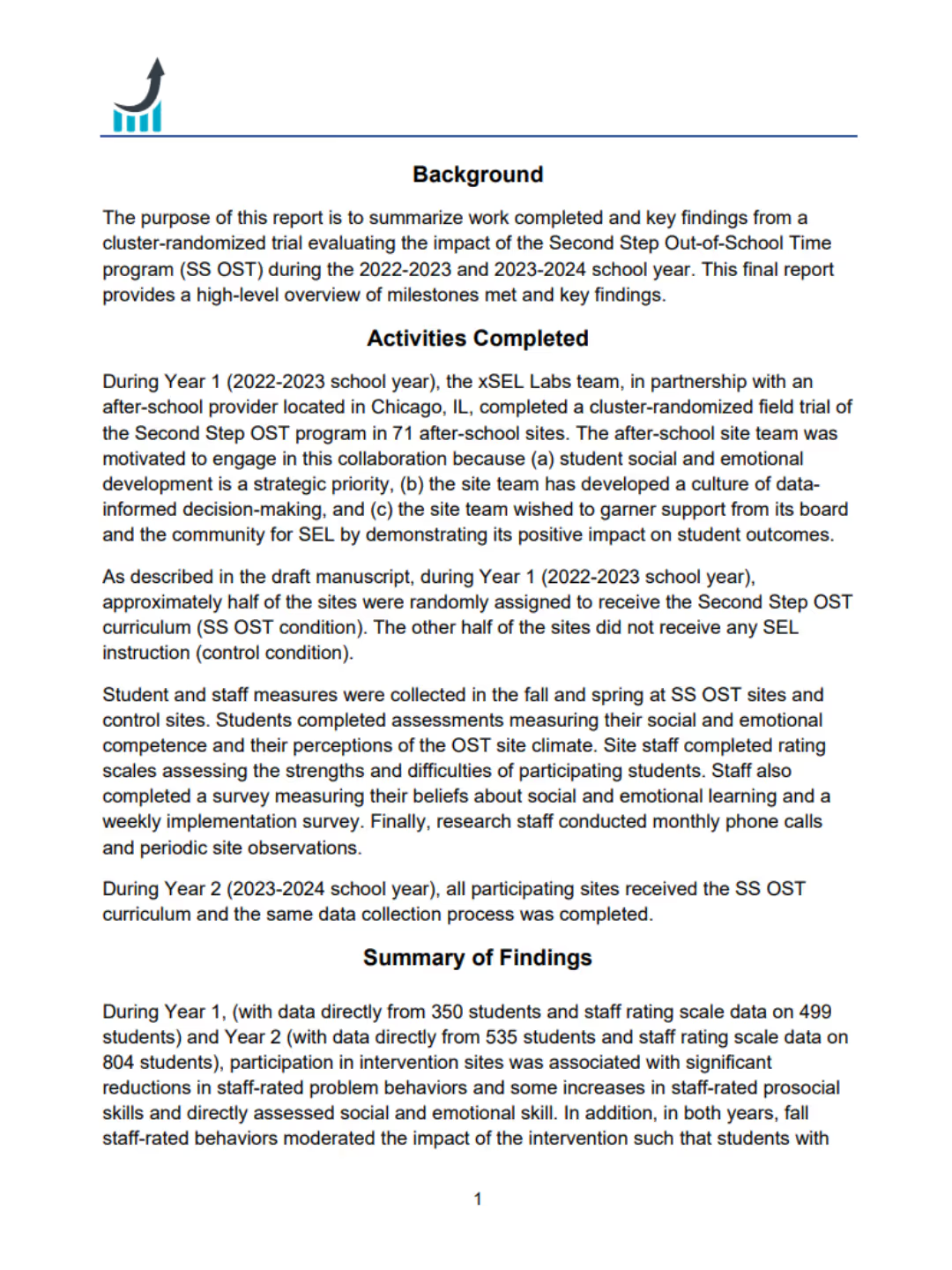
Second Step® Out-of-School Time Leads to a Significant Reduction in Student Problem Behavior

Second Step® Out-of-School Time Leads to a Significant Reduction in Student Problem Behavior

In a year-long evaluation study of nearly 3,000 elementary school students participating in the Second Step Out-of-School Time (OST) program, findings showed a significant decrease in problem behavior for students who received the program, compared to students in the control group.
Research/evidence
|
Before and after school
District Leader
Research/evidence
Before and after school
Current Second Step User
District Leader
Educator
Policy Leaders
School Leader
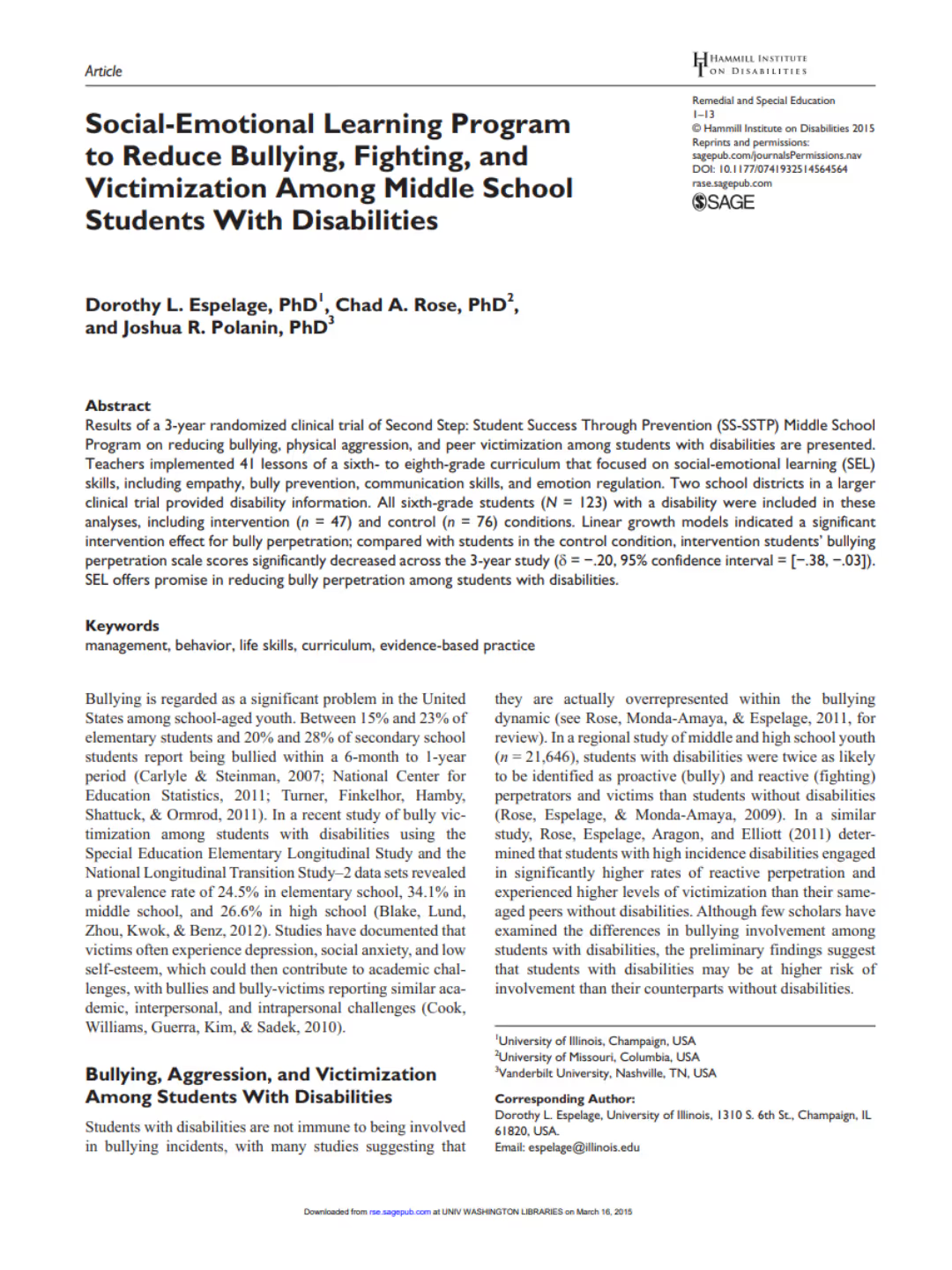
Twenty Percent Reduction in Bullying by Students with Disabilities

Twenty Percent Reduction in Bullying by Students with Disabilities

Analysis of a large-scale, randomized control trial reveals that among sixth-grade students who received the Second Step Middle School program, bullying victimization perpetrated by students with disabilities was reduced by 20 percent.
Research/evidence
|
Middle school
District Leader
Research/evidence
Middle school
Current Second Step User
District Leader
Educator
Policy Leaders
School Leader
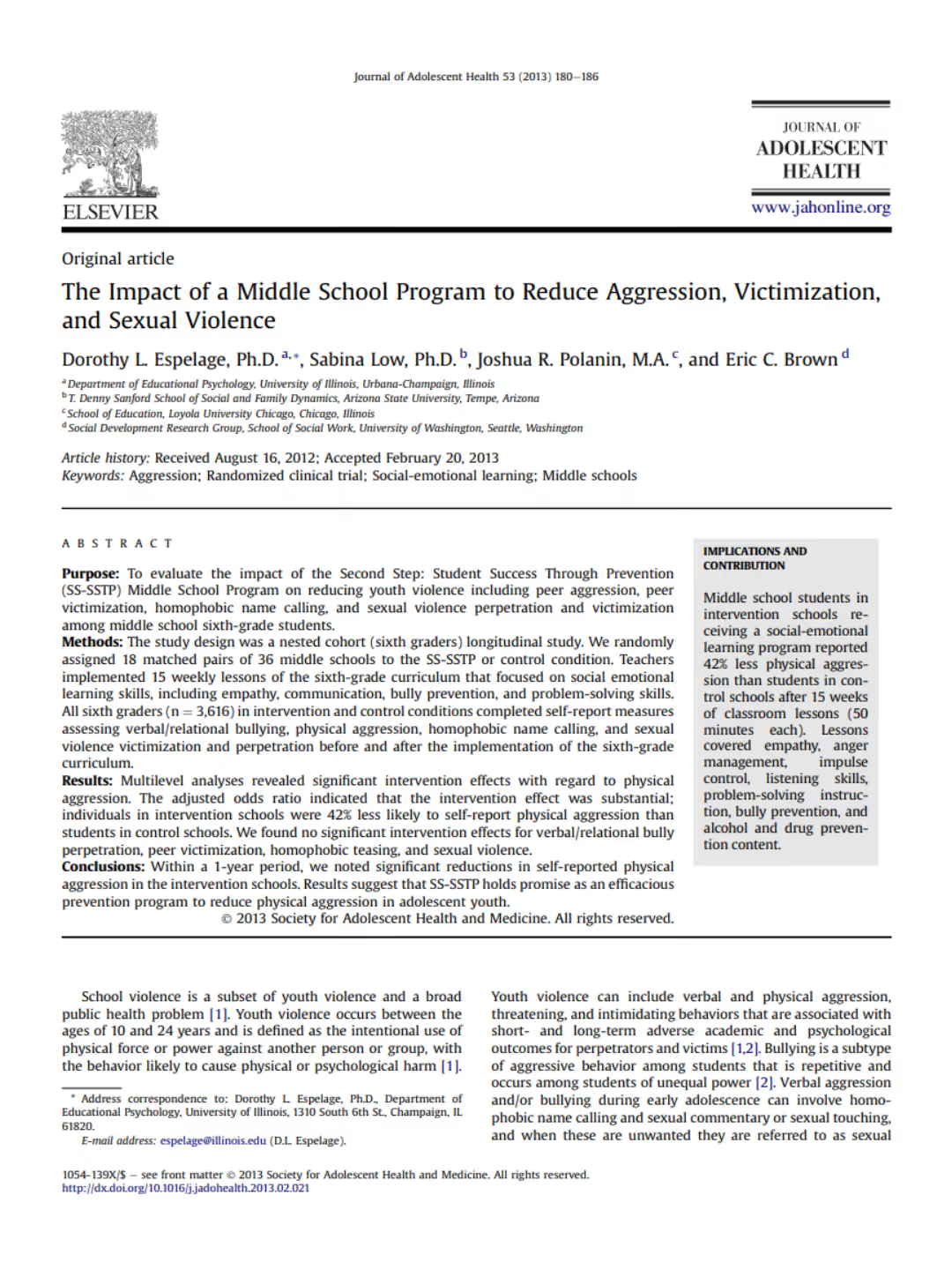
Physical Aggression 42 Percent Less Likely

Physical Aggression 42 Percent Less Likely

In a large-scale, multi-year randomized control trial involving 6,715 sixth-grade students, those who received Second Step Middle School were 42 percent less likely to report engaging in physical aggression.
Research/evidence
|
Middle school
District Leader
Research/evidence
Middle school
Current Second Step User
District Leader
Educator
Policy Leaders
School Leader
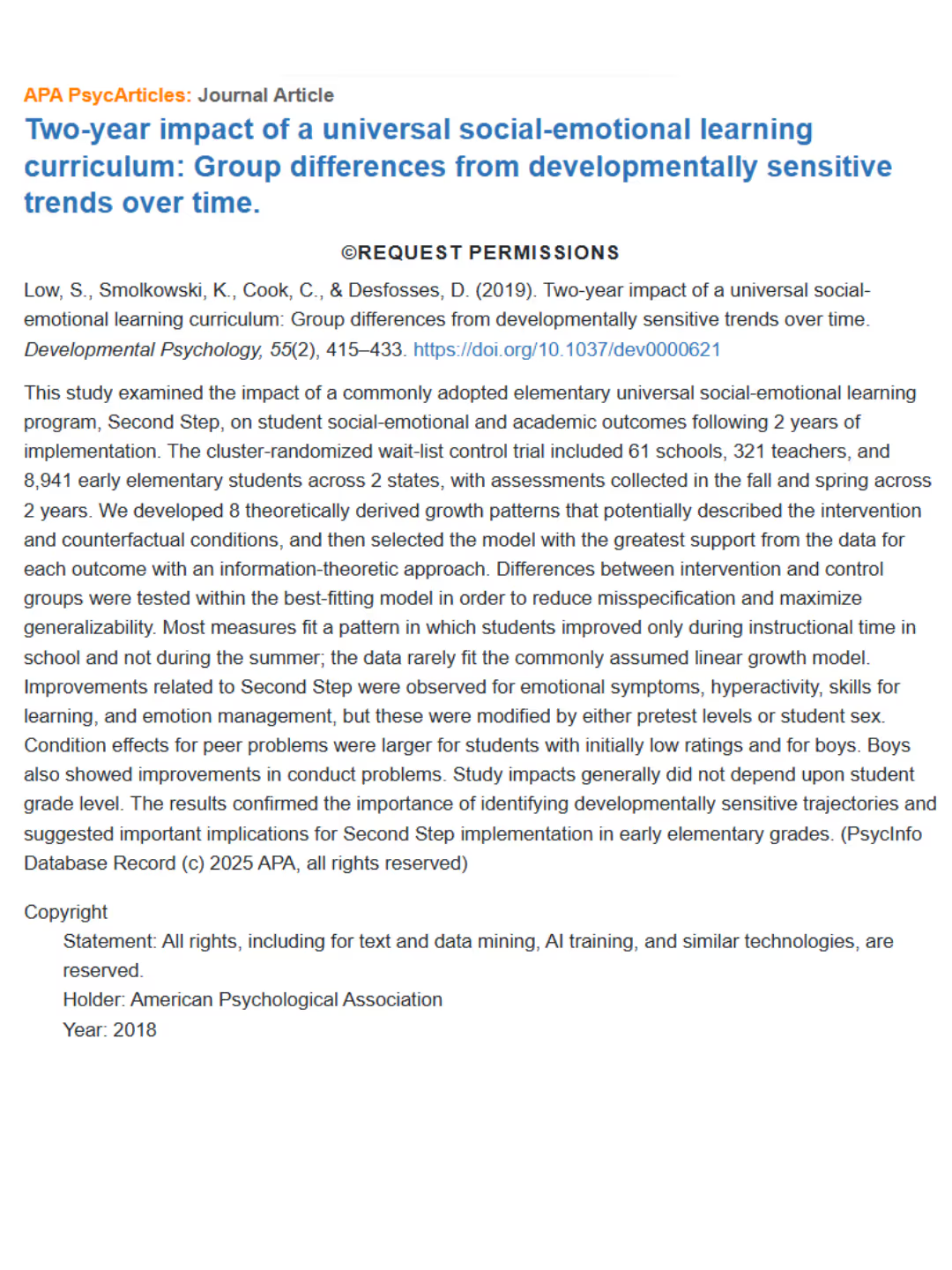
Two-Year Study Found Second Step® Elementary Increased Social and Emotional Skills and Decreased Disruptive Behaviors

Two-Year Study Found Second Step® Elementary Increased Social and Emotional Skills and Decreased Disruptive Behaviors

A large-scale, two-year randomized control trial found that Second Step Elementary led to increases in executive function, emotional regulation, and other social-emotional competencies, and simultaneously decreased hostile attribution and disruptive behavior.
Research/evidence
|
Elementary school
District Leader
Research/evidence
Elementary school
Current Second Step User
District Leader
Educator
Policy Leaders
School Leader
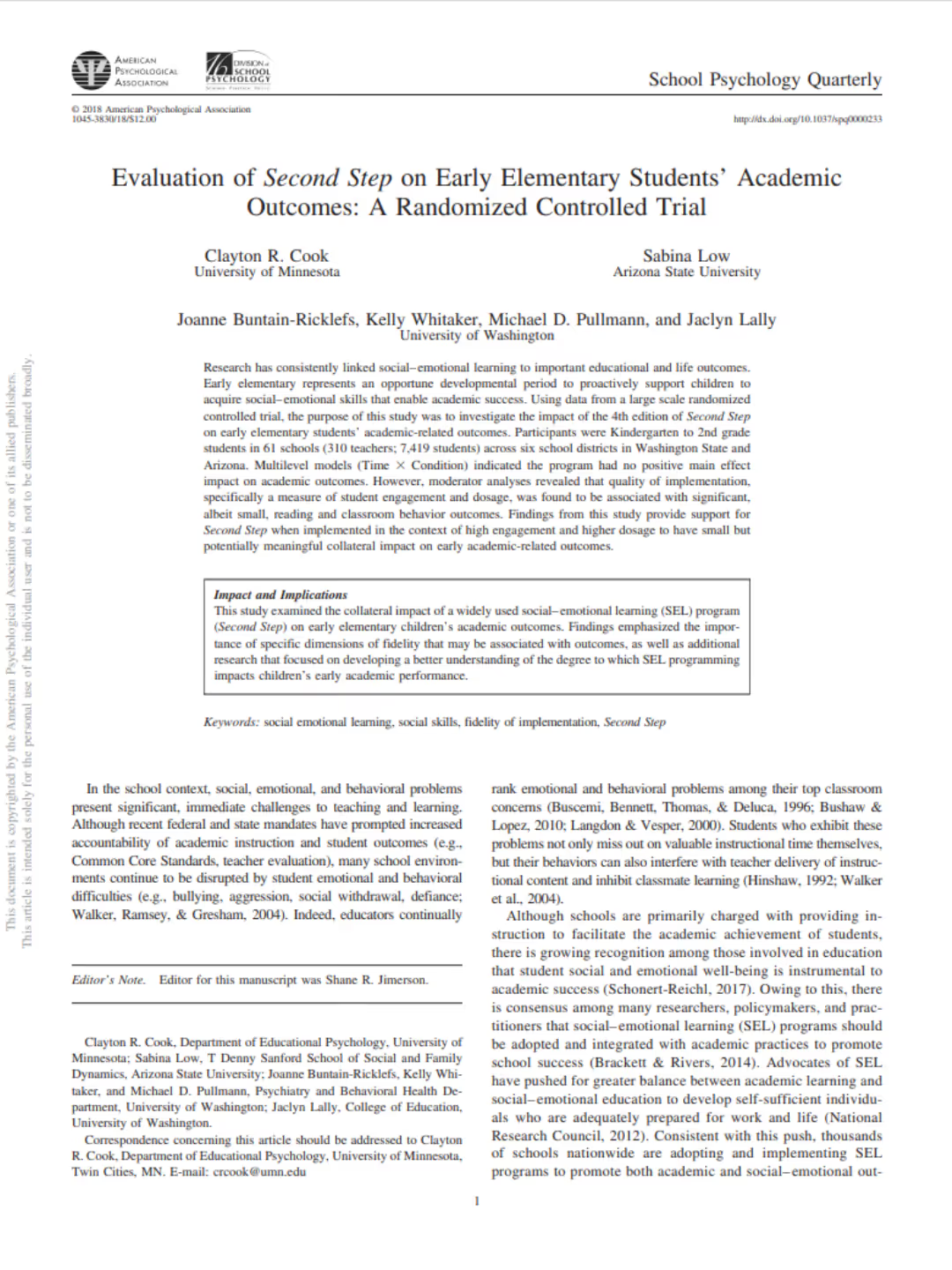
Second Step® Elementary Classroom Kits: Student Engagement and Number of Lessons Received Improved Behavioral Outcomes

Second Step® Elementary Classroom Kits: Student Engagement and Number of Lessons Received Improved Behavioral Outcomes

In a large multi-year study involving 61 elementary schools, authors found that when students engaged with the Second Step Elementary Classroom Kits program and received more lessons, they showed significant growth in both prosocial skills and academic achievement.
Research/evidence
|
Elementary school
District Leader
Research/evidence
Elementary school
Current Second Step User
District Leader
Educator
Policy Leaders
School Leader
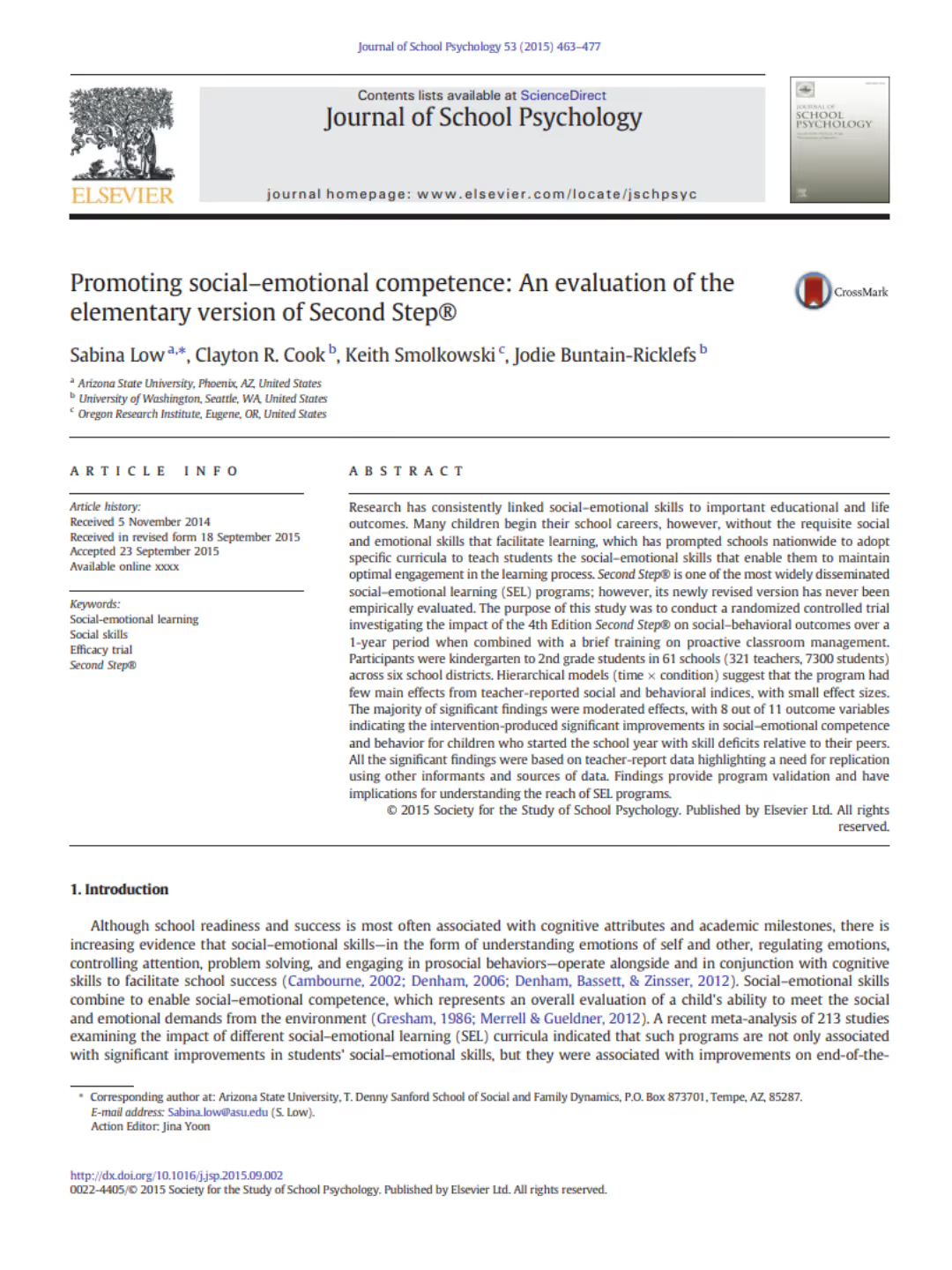
Improvements in Prosocial Skills, Empathy, Conduct Shown with Second Step® Elementary Classroom Kits

Improvements in Prosocial Skills, Empathy, Conduct Shown with Second Step® Elementary Classroom Kits

Students who received the Second Step Elementary Classroom Kits human skills program showed significant improvements in teacher-rated prosocial behaviors, empathy, conduct, and emotional symptoms, as well as significant decreases in teacher-rated peer problems. Students who were taught fewer Second Step Elementary Classroom Kits lessons showed fewer gains and significant increases in peer problems.
Research/evidence
|
Elementary school
District Leader
Research/evidence
Elementary school
Current Second Step User
District Leader
Educator
Policy Leaders
School Leader
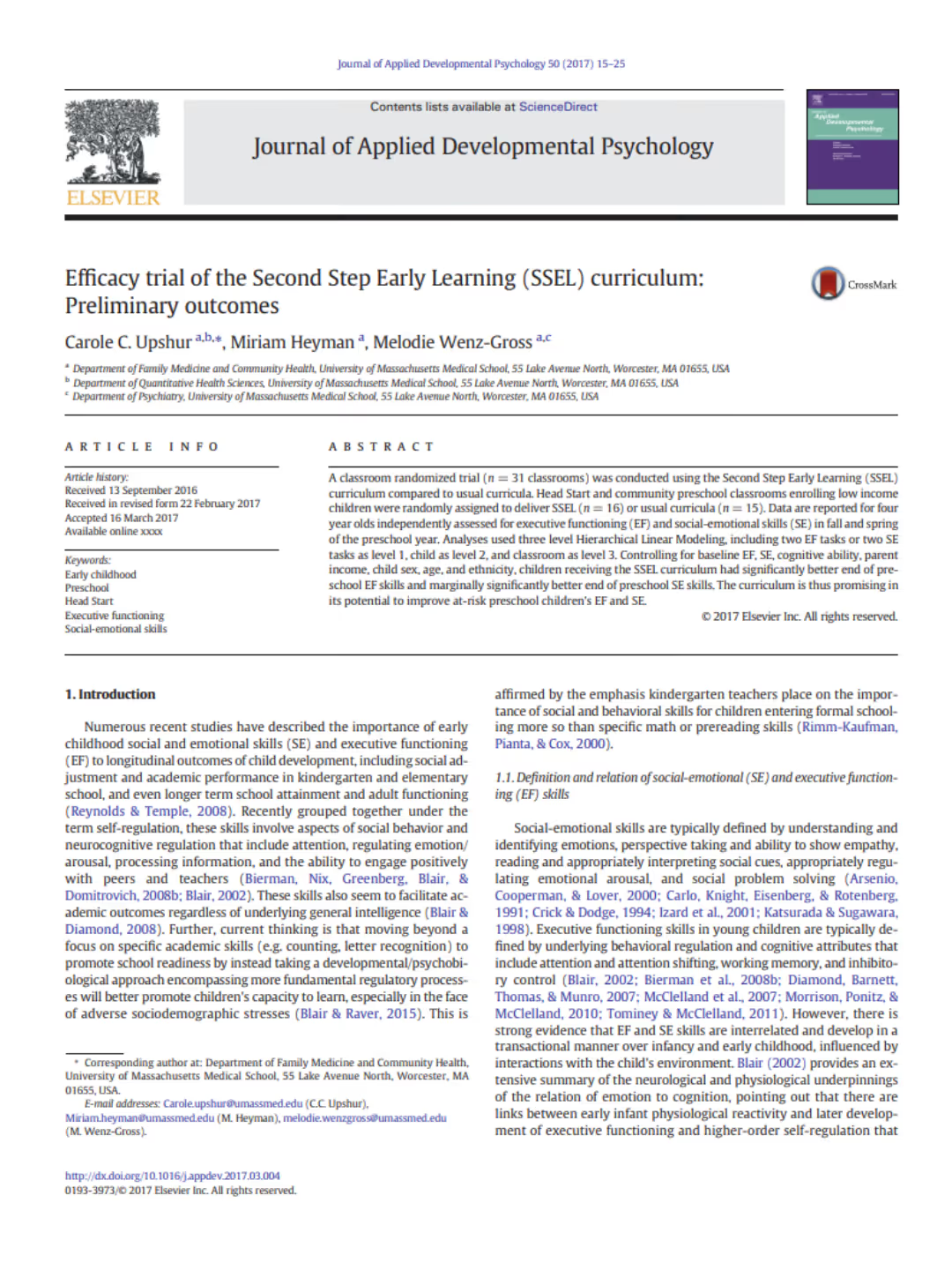
Increased Executive-Function Skills Shown in Preschoolers Who Received Second Step® Early Learning

Increased Executive-Function Skills Shown in Preschoolers Who Received Second Step® Early Learning

Preschoolers who participated in the Second Step Early Learning program performed better on two measures of executive function than their peers who did not participate. Executive function is a strong predictor of kindergarten readiness, academic performance, and social competence.
Research/evidence
|
Early learning
District Leader
Research/evidence
Early learning
Executive functions
Current Second Step User
District Leader
Educator
Policy Leaders
School Leader
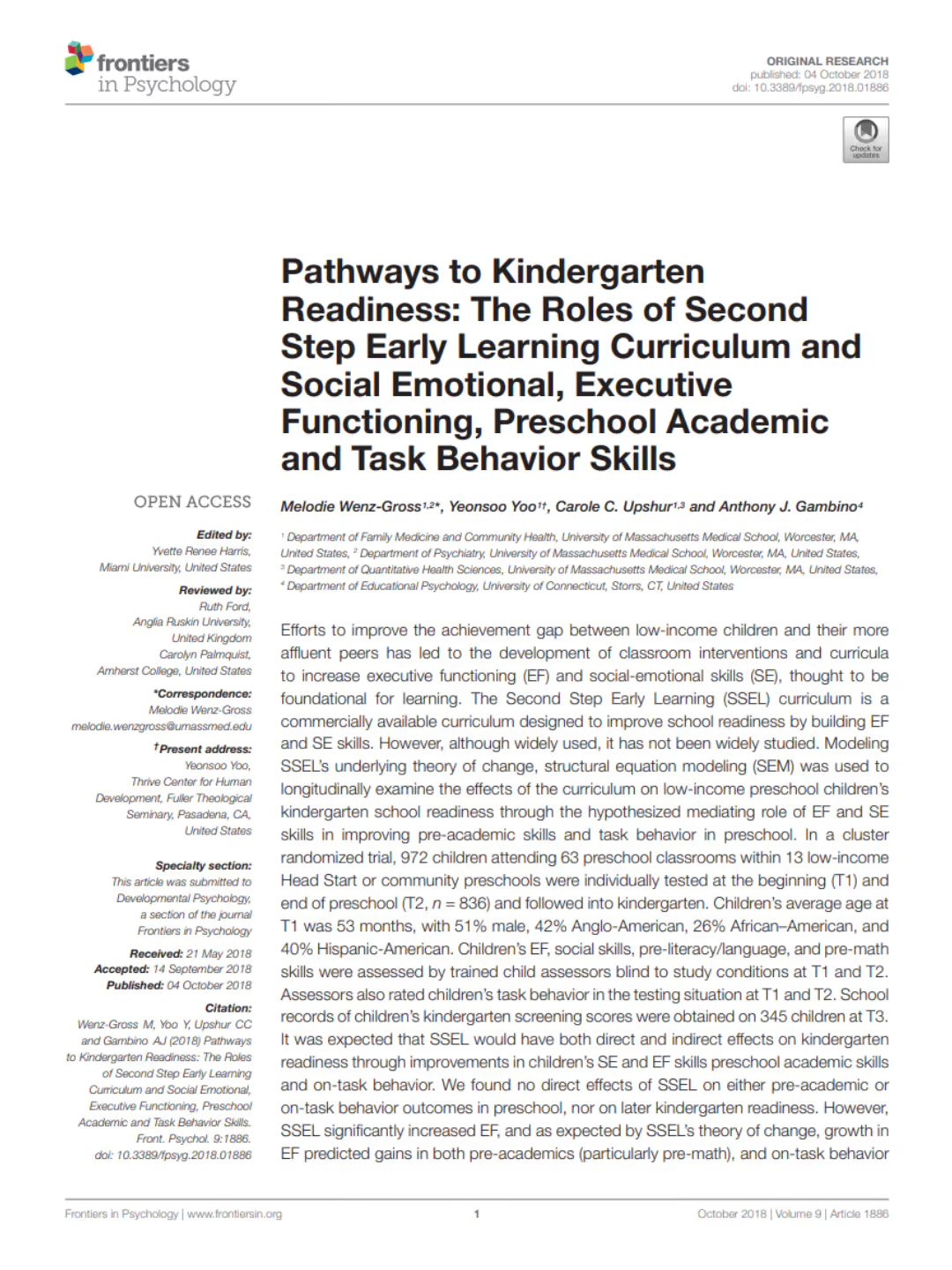
Second Step® Early Learning Is Shown to Significantly Increase Executive Function, Which Leads to Kindergarten Readiness

Second Step® Early Learning Is Shown to Significantly Increase Executive Function, Which Leads to Kindergarten Readiness

Executive function, a set of foundational cognitive skills, is strongly linked to young students’ kindergarten readiness and academic success. Findings from a recent randomized control trial indicate that participation in Second Step Early Learning leads to significant increases in preschoolers’ executive function. Growth in preschoolers’ executive function subsequently predicted gains in students’ pre-academic skills and on-task behavior, which in turn predicted their kindergarten readiness.
Research/evidence
|
Early learning
District Leader
Research/evidence
Early learning
Current Second Step User
District Leader
Educator
Policy Leaders
School Leader