
Resource Library

Audience

Type

Topic

Thank you! Your submission has been received!
Oops! Something went wrong while submitting the form.
Showing 100 items
How Human Skills Instruction Helps Prevent Bullying

How Human Skills Instruction Helps Prevent Bullying

A meta-analysis of 44 school-based anti-bullying programs found that programs incorporating SEL components—such as teaching empathy, emotion regulation, and social problem-solving skills—were significantly more effective at reducing bullying and victimization than programs that relied solely on discipline-based approaches.
Research/evidence
|
Human skills
District Leader
Research/evidence
Human skills
Current Second Step User
District Leader
Educator
Policy Leaders
School Leader
Social Competence in Kindergarten a Predictor of Future Outcomes

Social Competence in Kindergarten a Predictor of Future Outcomes

A groundbreaking 19-year longitudinal study found that social competence measured in kindergarten significantly predicted outcomes in education, employment, criminal activity, substance use, and mental health by age 25. For every one-point increase in social competence, students were significantly more likely to be employed and less likely to be arrested.
Research/evidence
|
Human skills
District Leader
Research/evidence
Human skills
Current Second Step User
District Leader
Educator
Policy Leaders
School Leader
Human Skills Programs Studied Return $11 for Every $1 Invested

Human Skills Programs Studied Return $11 for Every $1 Invested

A cost-benefit analysis of six evidence-based SEL programs found that, on average, every dollar invested returned $11 in long-term benefits, including reductions in criminal behavior, substance abuse, and other negative outcomes. This makes SEL one of the most cost-effective educational investments available.
Research/evidence
|
Human skills
District Leader
Research/evidence
Human skills
Current Second Step User
District Leader
Educator
Policy Leaders
School Leader
Human Skills Interventions Have Positive, Lasting Impact for K–12 Students

Human Skills Interventions Have Positive, Lasting Impact for K–12 Students

A landmark meta-analysis of 213 school-based SEL programs involving over 270,000 K–12 students found that participating students showed significant improvements in social-emotional skills, attitudes, behavior, and academic performance. Follow-up data indicated that benefits persisted at least six months after the programs ended.
Research/evidence
|
Human skills
District Leader
Research/evidence
Human skills
Current Second Step User
District Leader
Educator
Policy Leaders
School Leader
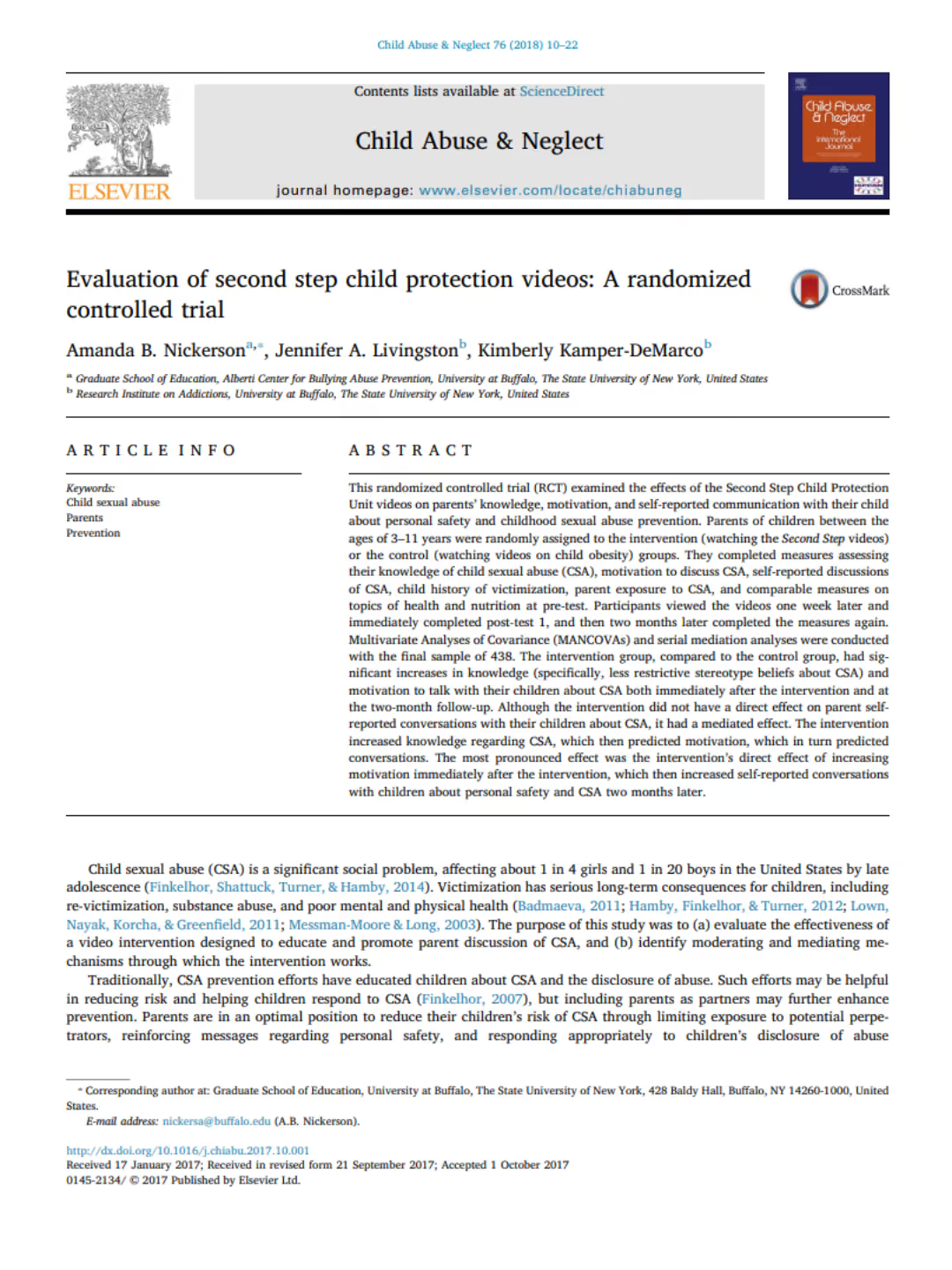
Increased Parent Knowledge About and Motivation to Discuss Child Sexual Abuse Prevention with Their Children After Viewing the Second Step® Child Protection Unit Family Materials

Increased Parent Knowledge About and Motivation to Discuss Child Sexual Abuse Prevention with Their Children After Viewing the Second Step® Child Protection Unit Family Materials

A study of 429 parents found that those who watched the Second Step Child Protection Unit family video demonstrated significantly higher knowledge of child sexual abuse, increased self-efficacy to discuss prevention with their children, and greater motivation to have those conversations compared to parents who did not watch the video.
Research/evidence
|
Child protection
District Leader
Research/evidence
Child protection
Current Second Step User
District Leader
Educator
Family/Caregiver
Policy Leaders
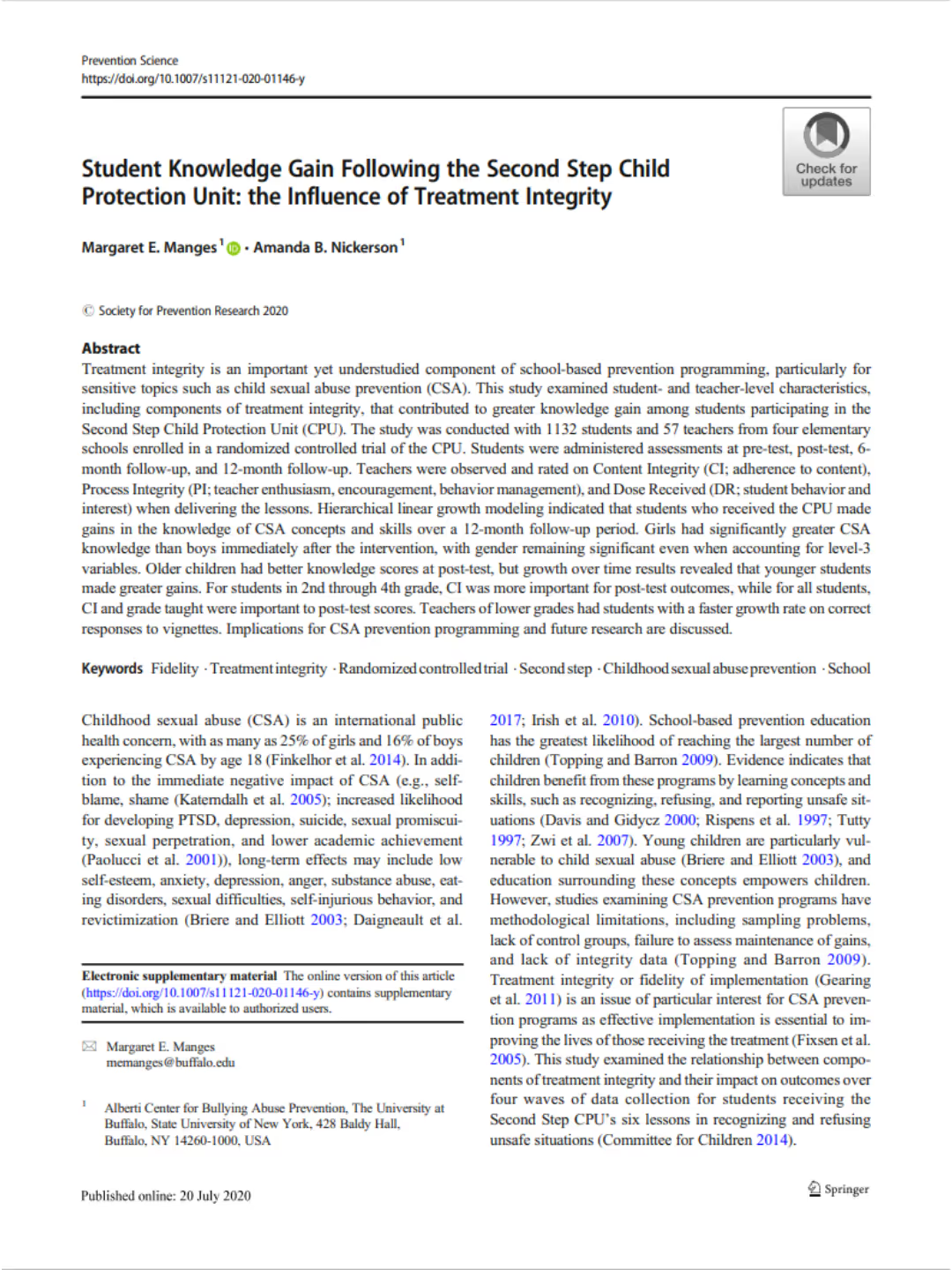
Higher Adherence to Second Step® Implementation Increased Student Knowledge of Child Sexual Abuse Prevention Concepts

Higher Adherence to Second Step® Implementation Increased Student Knowledge of Child Sexual Abuse Prevention Concepts

In a study of nearly 1,200 students from PreK to Grade 4, findings showed that greater adherence to the Second Step Child Protection Unit’s implementation guidelines was associated with significantly higher student knowledge of personal safety concepts related to preventing child sexual abuse.
Research/evidence
|
Child protection
District Leader
Research/evidence
Child protection
Current Second Step User
District Leader
Educator
Policy Leaders
School Leader
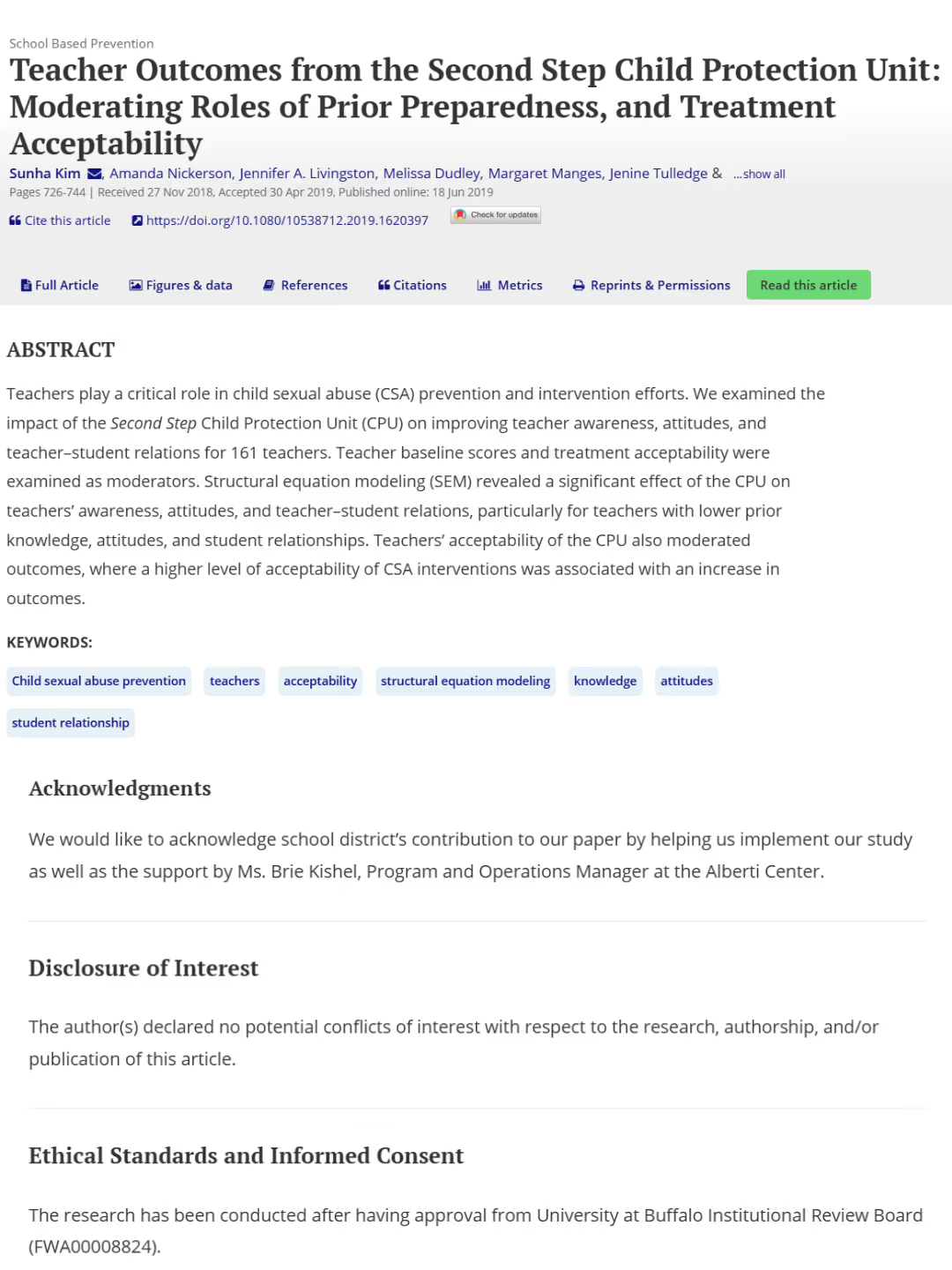
Teaching the Second Step® Child Protection Unit Increases Educators’ Knowledge About Child Sexual Abuse Prevention

Teaching the Second Step® Child Protection Unit Increases Educators’ Knowledge About Child Sexual Abuse Prevention

A study of 218 educators in grades PreK through 5 found that those who taught the Second Step Child Protection Unit had significantly greater knowledge of child sexual abuse, including recognizing risk factors and responding to disclosures, compared to a control group.
Research/evidence
|
Child protection
District Leader
Research/evidence
Child protection
Current Second Step User
District Leader
Educator
Policy Leaders
School Leader
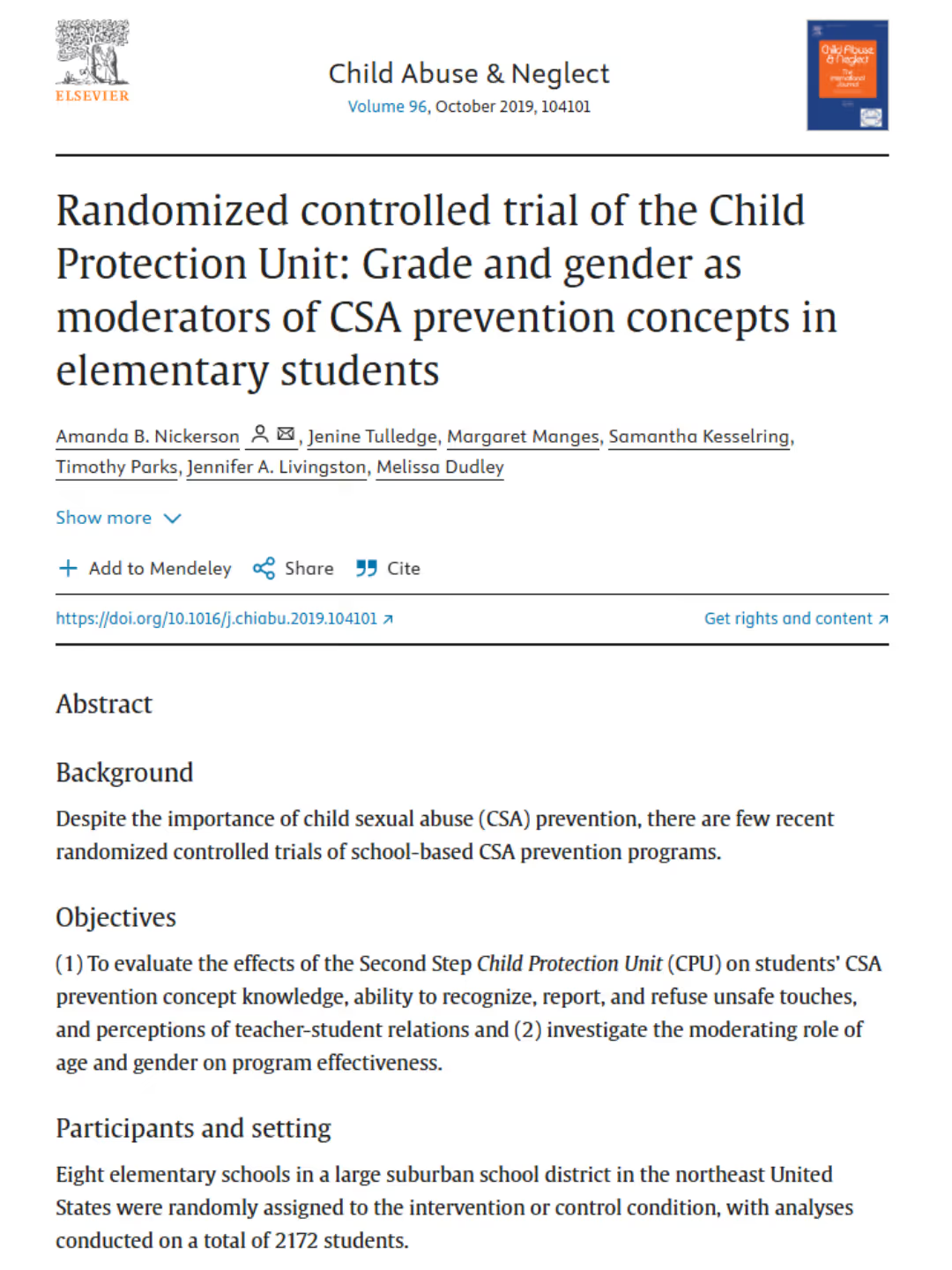
PreK to Grade 4 Students Participating in the Second Step® Child Protection Unit Show Increased Knowledge of Personal Safety and Protection Concepts

PreK to Grade 4 Students Participating in the Second Step® Child Protection Unit Show Increased Knowledge of Personal Safety and Protection Concepts

In a randomized control trial of nearly 1,200 students from PreK to Grade 4, students who participated in the Second Step Child Protection Unit showed significant improvements in personal safety knowledge, including identifying unsafe touches, knowing it’s not their fault, and understanding ways to stay safe.
Research/evidence
|
Child protection
District Leader
Research/evidence
Child protection
Current Second Step User
District Leader
Educator
Policy Leaders
School Leader