
Resource Library
Thank you! Your submission has been received!
Oops! Something went wrong while submitting the form.
Showing 100 items

Making Long-Term Human Skills Implementation Work: 5 Tips for Leaders
We spoke to Dorothy Espelage, PhD, professor of education at the University of North Carolina. She shares five tips to ensure kids get the most benefits from human skills instruction.
May 1, 2024
Blog
School Leader
Blog
Implementation resources
Human skills
School climate
No items found.
Make an Impact with Human Skills Assessments: Insights from Three Experts
We sat down with three experts in the human skills curriculum and assessment space to identify ways to ensure assessment success and avoid common roadblocks.
April 24, 2024
Blog
School Leader
Blog
Implementation resources
Human skills
School climate
No items found.

Connectedness Holds the Key to Student Well-Being: Insights from the CDC’s Youth Risk Behavior Survey
Explore how school connectedness influences student well-being, and learn strategies from the CDC to enhance human skills development.
April 17, 2024
Blog
Educator
Blog
School climate
Human skills
Emotion regulation
No items found.

Preventing Cyberbullying: The Connection with Human Skills Development
Explore how strengthening human skills helps fight cyberbullying, creating safer online spaces for kids by fostering empathy, self-regulation, and positive environments.
April 10, 2024
Blog
Educator
Blog
Bullying prevention
Digital well-being
Human skills
No items found.
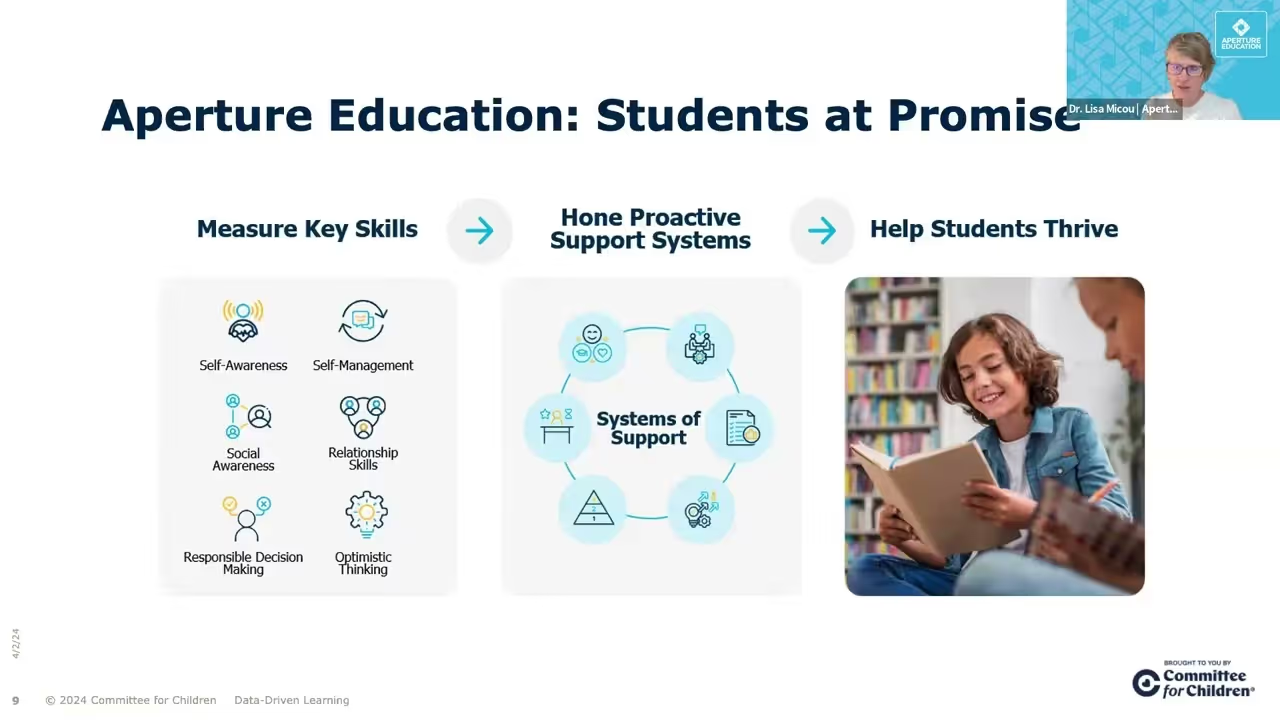
Data-Driven Learning: The Role of Assessments in Human Skill-Building Success
How do you ensure that your human skills curriculum is not only engaging, but effective? You reimagine assessment as an integral part of the learning journey. Through our partnership with Aperture Education, the leading human-skills assessment provider in K–12 education, you can now measure students’ social and emotional skill development to determine if they are mastering Second Step® competencies. In this webinar, you will: Learn how you can empower your team with quick and reliable data that maximizes Second Step program implementation. Walk through the research-based DESSA Second Step assessments and see how educators can gain real-time knowledge of where students are in their human skills learning. Learn how educators can differentiate instruction with reliable, actionable data. Identify areas of progress and ongoing opportunities to focus skill development to maximize the return on investment of your Second Step programs. Start maximizing the impact of human skills instruction in your schools and district today.
April 9, 2024
Webinar
Current Second Step User
Webinar
Implementation resources
Human skills
Tiered Interventions
Current Second Step User
District Leader
Educator
Policy Leaders
School Leader

Teaching Responsible Decision-Making
Discover how human skills programs nurture responsible decision-making in kids, equipping them with key skills for success in school and beyond.
April 3, 2024
Blog
Educator
Blog
Decision-making resources
Problem-solving
Empathy
Current Second Step User
District Leader
Educator
Policy Leaders
School Leader

4 Strategies for Effective Implementation of Human Skills Programs
Learn four key strategies for integrating human skills programs in schools to enhance empathy, confidence, and resilience among students for a brighter future.
March 27, 2024
Blog
Educator
Blog
Implementation resources
Human skills
No items found.
Adolescent Mental Wellness in Crisis: What Can High Schools Do?
Description: In a recent national survey by the Centers for Disease Control and Prevention (CDC), a whopping 60 percent of teen females, 30 percent of teen males, and 52 percent of LGBTQ+ teens reported feeling persistently sad and hopeless in the past year. The survey’s takeaway: “Overall, young people are experiencing a level of trauma and distress that requires action.” When young people are in distress, they are not able to learn to their potential. Join Committee for Children’s Senior Research Scientist Dr. Jane Choi to explore the mental health crisis facing adolescents today and what high schools can do to support students to thrive and succeed. She explores the science of adolescent development and how both school leaders and educators can strategically strengthen key elements of students’ school experience that contribute to both well-being and academic success. View this edWebinar to learn about: • The science of adolescent brain and emotional development • What the latest research indicates for how to best support adolescents to thrive in school and in their transition to adulthood • Actionable strategies for school leaders and classroom educators to support students’ well-being throughout the school day Every student—every human—deserves to be supported to be well and do well. With the right approaches, you can make a difference in well-being while also supporting student engagement and motivation. This recorded edWebinar is of interest to high school leaders and educators.
February 6, 2024
Webinar
School Leader
Webinar
High school
Emotion regulation
Human skills
No items found.