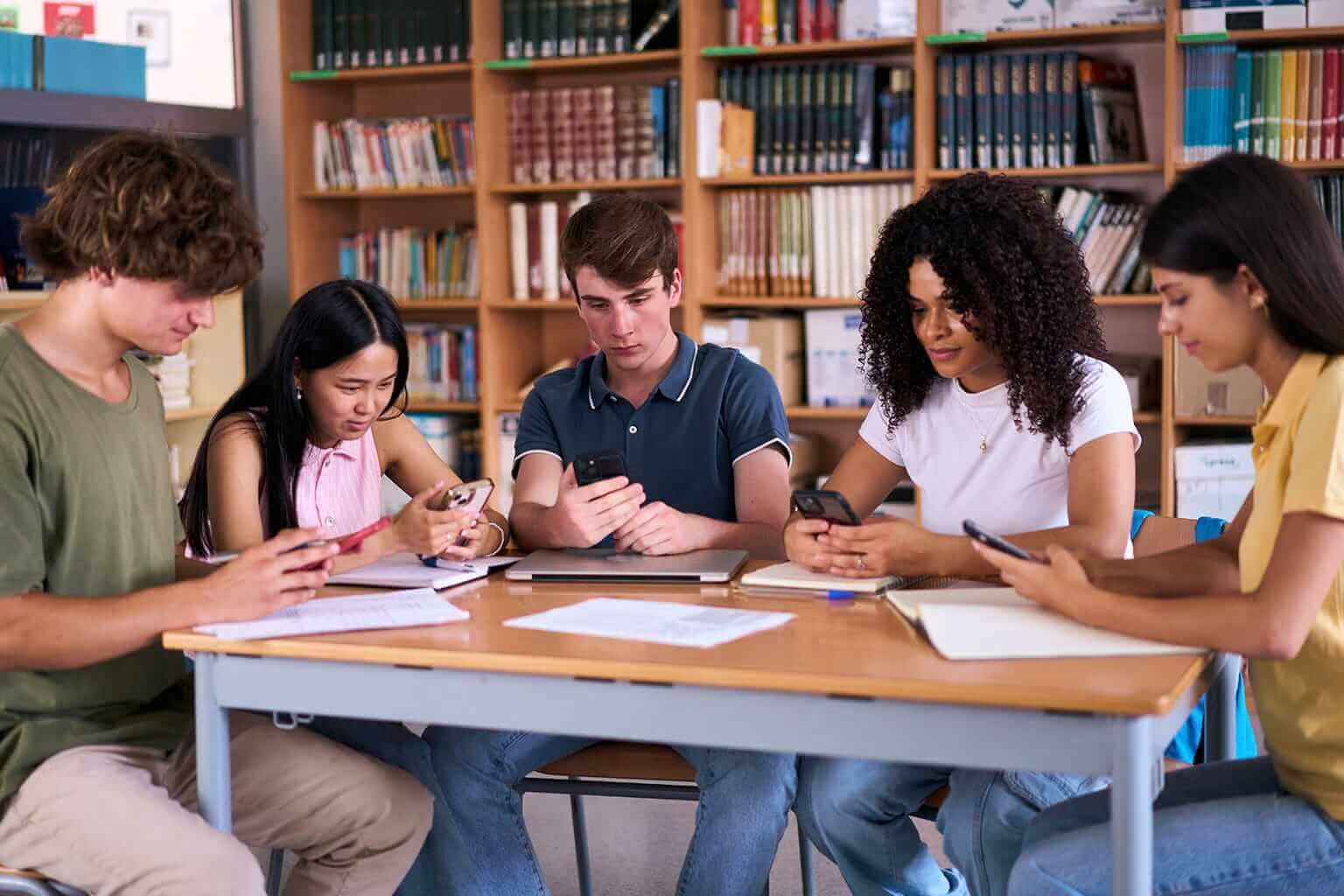

Why Human Skills Are the Engine Behind School Climate
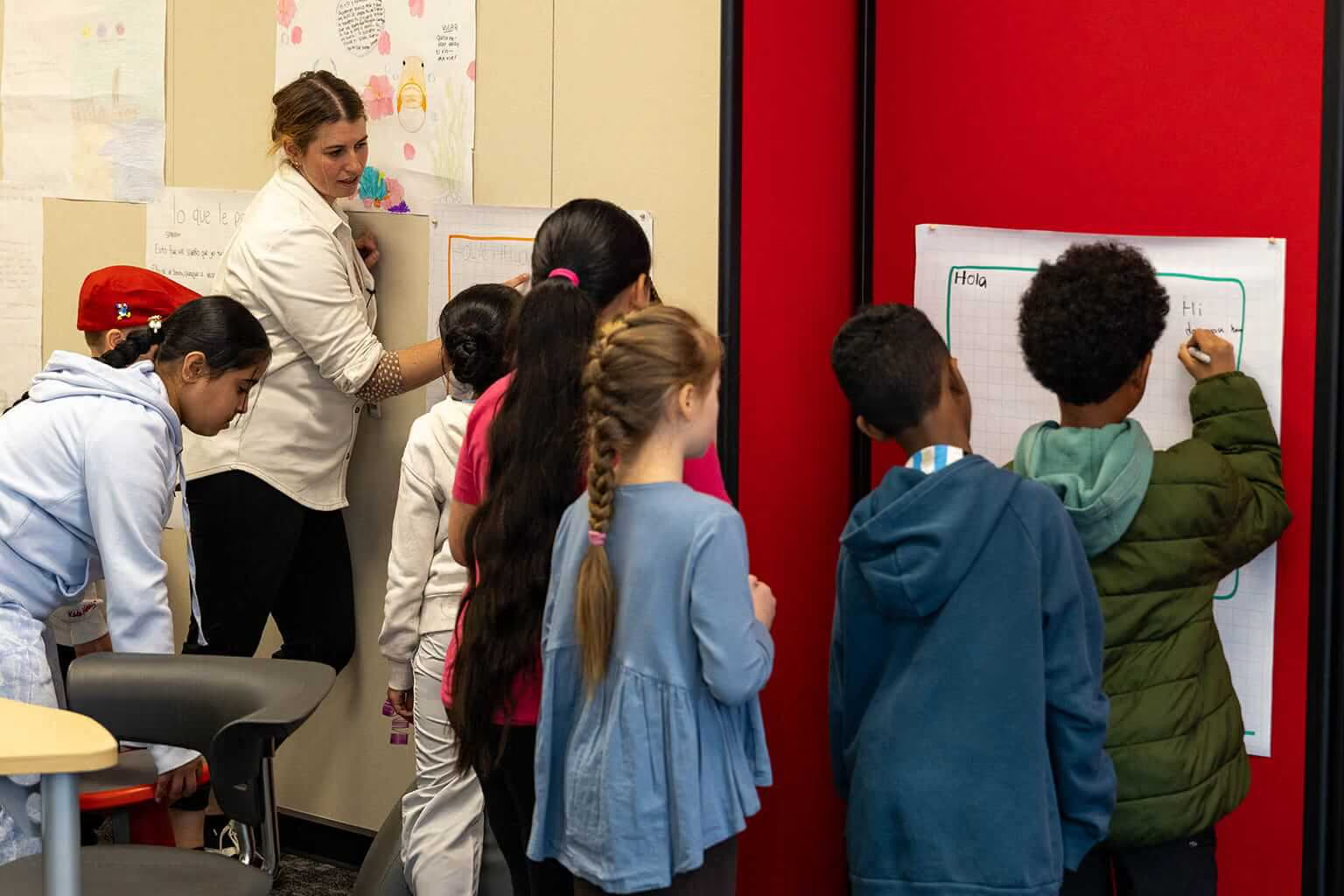
District leaders are under immense pressure to improve attendance, behavior, belonging, achievement, and workforce readiness, often through multiple initiatives working in parallel.
But these outcomes don’t operate separately. They rise and fall together because they’re shaped by the same underlying system: school climate.
And school climate is not defined by a single program or initiative. It’s defined by the human skills students use every day in classrooms, hallways, and interactions with peers and adults.
Human skills are the measurable drivers of school climate
Human skills are the observable, teachable competencies that show up in daily student behavior. These skills include:
- Problem-solving
- Resilience
- Collaboration
- Communication
These skills determine how well students can navigate challenges, stay engaged in learning, and contribute to a productive school environment.
WestEd conducted independent studies on Second Step® K–8 digital programs, spanning more than 25,000 students across multiple states, and they found measurable improvements in school climate, belonging, and the quality of student-teacher relationships.
In other words, when these skills are intentionally developed, school climate doesn’t just improve in theory; it improves in ways that can be measured across real school systems.
That makes strengthening human skills the most direct lever schools have for shaping school climate—and why they should be a district’s top priority.
Connecting human skills to what districts are measured on
When human skills are consistently developed across classrooms and grade levels, they directly influence the outcomes districts are accountable for:
- Attendance improves when students feel connected and capable of engaging in school.
- Behavior improves when students can manage conflict and respond constructively.
- Belonging strengthens when students can build relationships and communicate effectively.
- Achievement improves when students can persist, problem-solve, and stay engaged in learning.
- Workforce readiness skills grow as students learn to collaborate, adapt, and take responsibility.
This is not a collection of separate improvements. It’s a connected chain from skills to climate to outcomes.
WestEd’s research further reinforces this connection, showing that consistent teaching of these skills is associated with stronger school climate conditions and improved student outcomes across engagement, behavior, and academic indicators.
What this looks like across grade levels
Elementary school: Building the foundation
Elementary students are learning how to function within a structured learning environment.
Skills like empathy, emotion regulation, and respectful communication help establish routines, build relationships, and create consistency in the classroom.
When developed early, these early skills shape the foundation of school climate before it becomes visible at scale.
WestEd research on the Second Step® Elementary digital program reported significant improvements in academic motivation, self-management, and prosocial behavior along with reductions in out-of-school suspensions.
These outcomes show that with sufficient human skills instruction, students are more engaged in learning and classrooms operate with greater consistency.
Middle school: Maintaining connection through change
As social dynamics become more complex, middle school students need support navigating conflict and peer relationships.
Skills like collaboration, communication, and conflict resolution help students stay engaged during a stage when disconnection often increases.
Independent studies by WestEd found that schools that sufficiently implemented Second Step® Middle School had significant improvements in school climate, teacher-student relationships, and student belonging as well as measurable gains in academic performance and attendance and reductions in behavioral incidents.
High school: Preparing for life beyond school
Students are expected to operate independently, manage competing demands, and collaborate across diverse settings.
Resilience, communication, and problem-solving become essential for navigating academic demands and transitioning into college, careers, and adulthood.
At this stage, human skills are not just school skills. They’re life skills in practice.
From human skills to academic and behavioral outcomes
Human skills shape how students show up in every learning moment. Those moments accumulate into school climate. And school climate directly influences academic and behavioral outcomes.
When schools intentionally develop essential human skills, they could see improvements in:
This is why school climate is not separate from academic success but rather the condition that makes it possible.
A clearer way to understand how schools create impact
For years, schools have worked across overlapping frameworks like behavior support, climate initiatives, and college/career readiness, addressing similar challenges in different languages.
What’s been missing is a unified structure that connects daily student behavior to system-level outcomes.
Human skills instruction provides that structure.
Human skills clarify the relationship between:
- What students do every day
- The environment those behaviors create
- The outcomes districts are measured on
This shifts the conversation from isolated initiatives to a connected system of skill development and school climate building.
The recent Second Step rebrand reflects this shift toward a more unified operating model for schools—one that connects human skills development, school climate, and student outcomes into a single, coherent system. It moves the conversation away from fragmented initiatives and toward a clearer understanding of how improvement actually happens.
Ready to strengthen school climate through strengthening human skills?
School climate doesn’t improve through disconnected efforts.
It improves when students consistently build the communication, collaboration, problem-solving, and resilience skills that shape how they interact and engage every day.
When these skills are developed intentionally across grade levels, they strengthen school climate and create a more direct path to improving the outcomes districts care most about.
Explore how Second Step programs help educators strengthen human skills that improve school climate and support student success. You can also connect with us to align on your district’s priorities and implementation needs.
Recent Posts
Better Problem-Solving Starts with Strong Human Skills
How Implementation Data Is a Window into What Works—and What Doesn’t