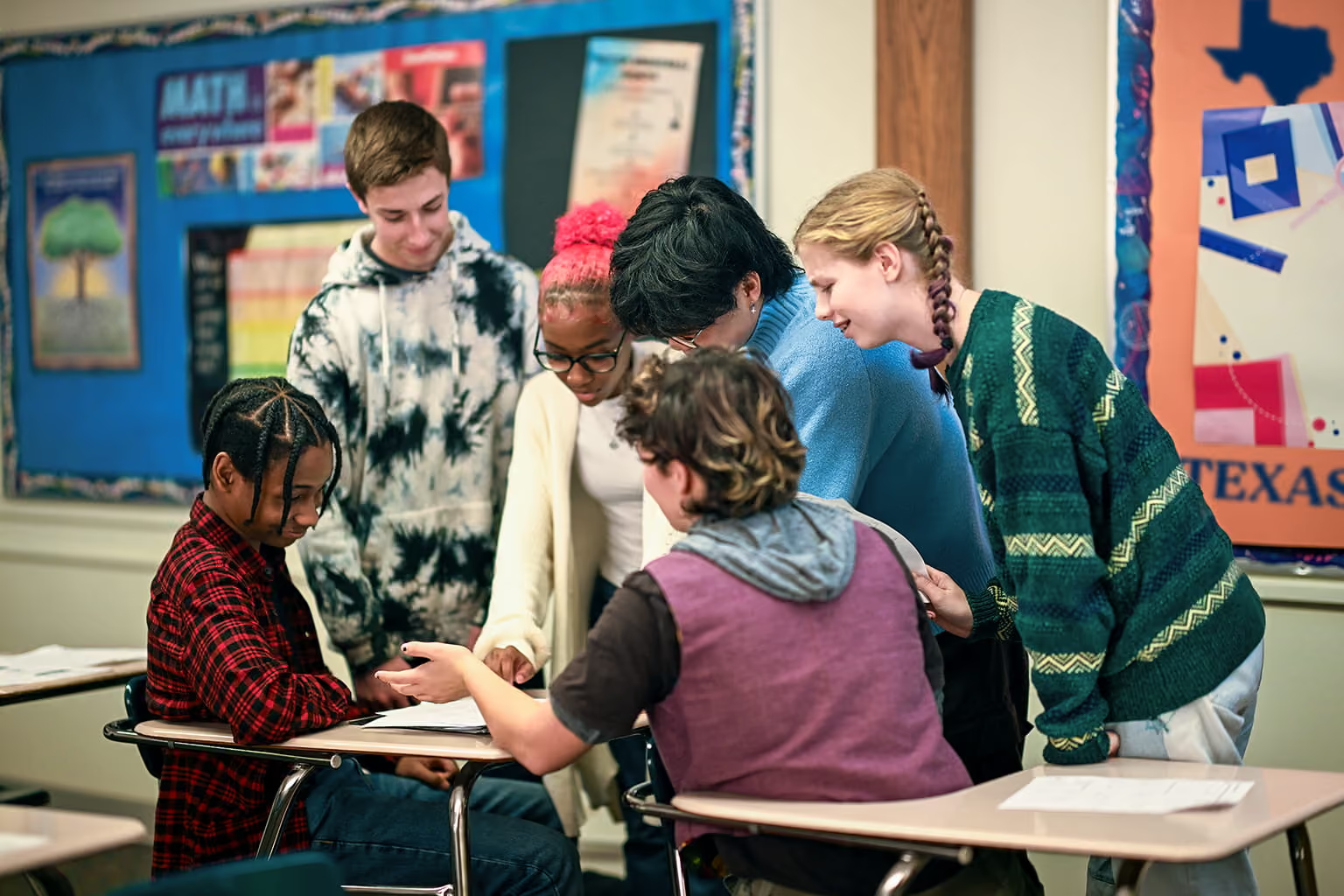
Future-Ready Learners: Why Human Skills Matter in the Age of AI
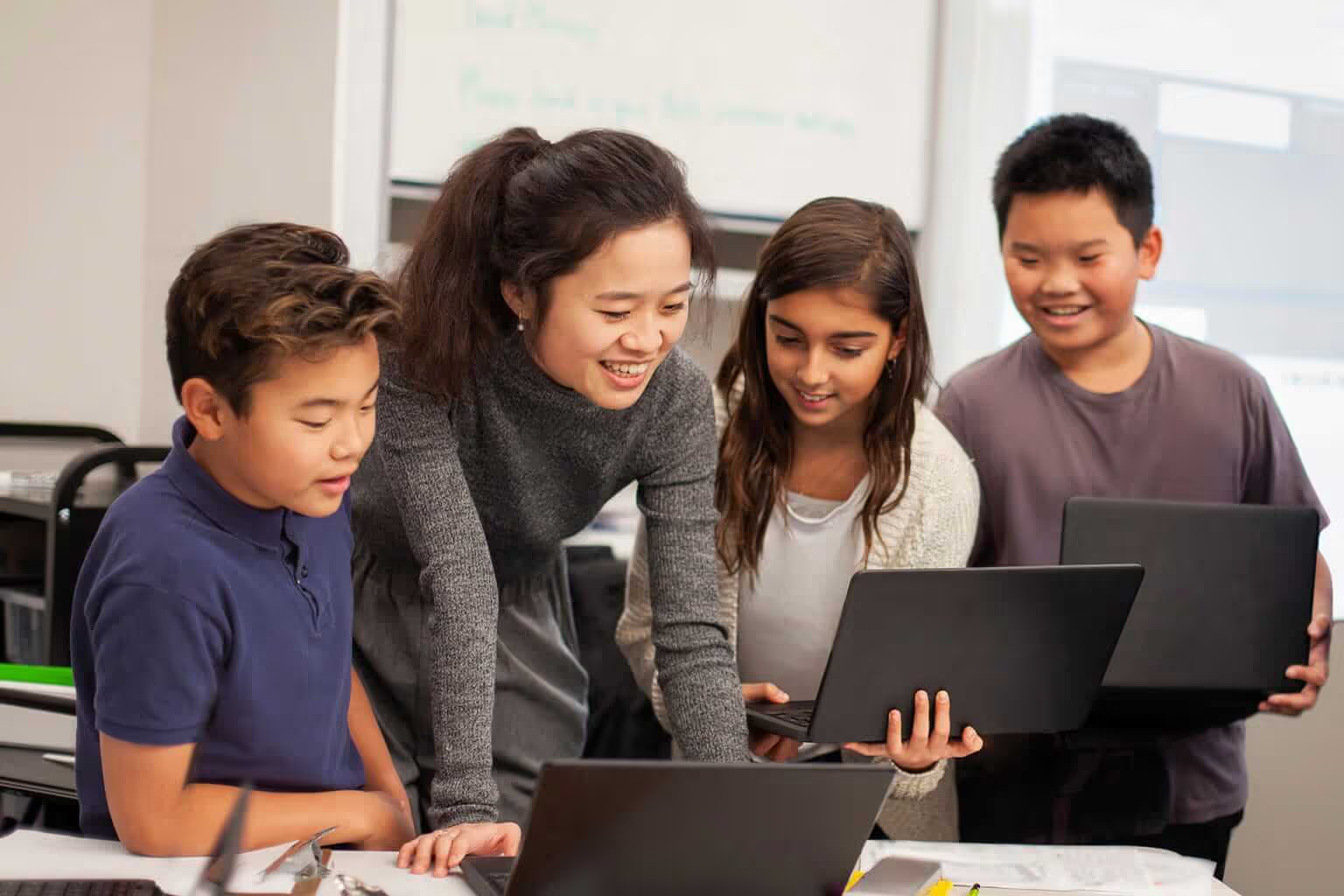
Artificial intelligence (AI) is already changing how students learn, think, and complete their work.
Students are using AI to brainstorm essays, solve math problems, and summarize complex texts in seconds. Recent data confirms how quickly this shift is happening. Nearly 70% of high school students report using ChatGPT to help with school assignments and homework, and about one-third of parents say their child is already using AI for learning.
For educators, that shift brings both opportunity and a new kind of uncertainty: What skills matter most when answers are always within reach?
The answer isn’t less technology. The answer is a stronger focus on developing the human skills that technology can’t replace.
Because in a world of automation, what sets students apart isn’t just what they know academically. It’s how they think, how they relate to others, and how they navigate challenges. It’s strong human skills that help turn a student into an engaged learner.
The skills that don’t automate
AI can generate ideas. It can mimic tone. It can even approximate analysis.
But it can’t build relationships in a classroom. It can’t navigate a disagreement between peers. And it can’t make thoughtful decisions rooted in empathy, ethics, or lived experience.
These are some of the skills that show up every day in schools:
- Managing emotions during stressful moments
- Communicating clearly and respectfully
- Working through conflict and collaboration
- Making responsible, informed decisions
These aren’t “extra” skills. They’re foundational to how students learn and how they’ll function in an increasingly complex, technology-driven world.
Digital literacy needs a human layer
As schools integrate AI and other digital tools, digital literacy has become essential. Students need to know how to use technology effectively, evaluate information, and understand its impact.
But digital literacy on its own isn’t enough.
Students also need the ability to:
- Question what they see and generate their own ideas
- Recognize bias, both in content and in algorithms
- Use technology responsibly and ethically
- Stay engaged and focused in environments designed to distract
This is where human skills and digital literacy intersect. Together, they help students move from passive consumers of technology to thoughtful, active participants.
The Second Step® Digital Well-Being specialized unit supports this connection in practice. The specialized unit is designed to help K–12 students strengthen the human skills needed for responsible technology use, stronger focus, and more intentional engagement with digital tools.
By integrating these skills into everyday learning, the Digital Well-Being specialized unit helps enable a positive school climate while helping students navigate technology in ways that are thoughtful, balanced, and grounded in real-world decision-making.
Preparing students for what’s next
The future of work is evolving quickly, and not just in technical fields. Workforce leaders are already signaling this shift. In a recent Fortune interview, JPMorgan Chase CEO Jamie Dimon emphasized that as AI reshapes jobs, skills like communication, curiosity, and emotional intelligence will be essential for long-term success. He said, “Once young workers are able to tap into those soft skills, they’ll have ‘a great life.’”
Employers consistently point to skills like communication, adaptability, and problem-solving as critical for career readiness and growth in a rapidly changing world. These are the same skills that help students succeed in school today.
When students develop these abilities, they’re better prepared to:
- Collaborate across differences
- Navigate ambiguity and change
- Think critically about complex problems
- Build meaningful connections in both digital and in-person spaces
In other words, they’re not just prepared for their next test. They’re prepared for what comes after the classroom.
What this looks like in practice
Integrating human skills instruction into daily instruction doesn’t require a complete overhaul. In many cases, it’s about being intentional with moments that already exist.
That could look like:
- Creating space for students to reflect on how they approached a task, not just the outcome
- Facilitating discussions that encourage perspective-taking and respectful disagreement
- Embedding decision-making and problem-solving into group work
- Modeling how to navigate challenges, setbacks, and feedback
These practices help students build the awareness and habits they’ll carry beyond the classroom.
A more balanced approach to learning
As AI becomes more present in education, it’s easy to focus on what technology can do.
But focusing on what technology cannot do is just as important.
Human skills, such as empathy, communication, and responsible decision-making, remain at the core of how students learn, connect, and grow. When paired with strong digital literacy, they create a more balanced, future-ready approach to education.
Second Step programs are designed to support this balance, helping educators grow these essential skills in ways that are practical, evidence-based, and grounded in real classroom experiences.
Because preparing students for the future isn’t just about keeping up with technology. It’s about helping them develop the skills that will always matter, online and off.
Want to help students thrive in an AI-driven world?
Discover how Second Step programs can help you strengthen student readiness through intentional, everyday skill-building in the classroom. You can also request a free consultation with one of our expert team members to explore how this approach can support teachers, strengthen student skills, and align across your district.
Recent Posts
Always On but Never Connected: The Digital Divide Between Students
5 Tips to Maximize Student Outcomes Through Second Step® Program Data