Finding the Balance Between High Tech and No Tech
What is the right tech for learning?
At Committee for Children, our solutions strive to use the right technology to support the development of human skills, technology that’s at least broadly accessible and that strengthens relationships rather than replaces them.
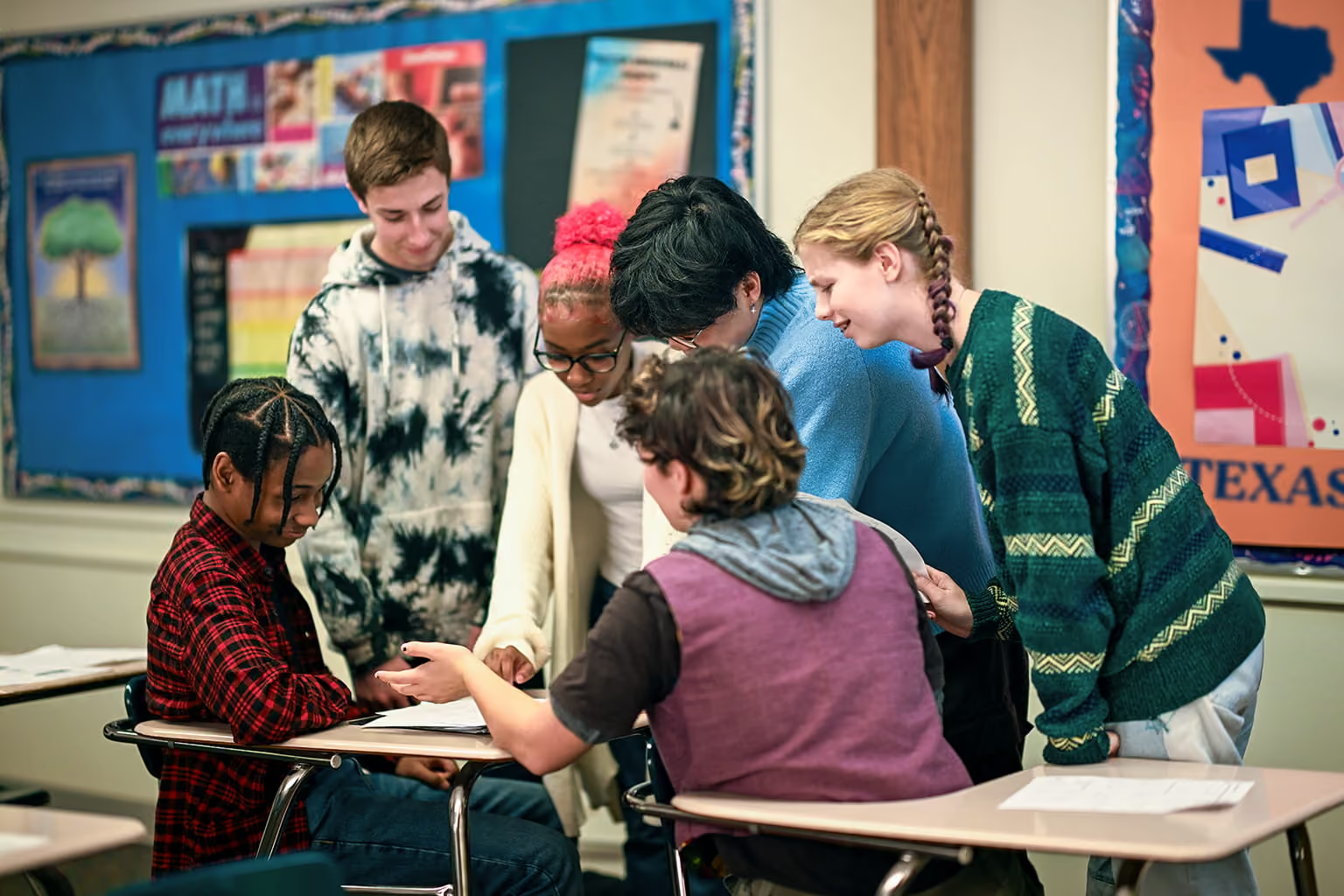
The core of our work, developing essential human skills, demands relational learning and interaction between students and educators. This keeps us firmly committed to prioritizing one‑to‑one time between real people in real learning environments, rather than one‑to‑one time between students and their devices.
Amidst pushes to jump on a high-tech, low-tech, or no-tech bandwagon, we remain conscientious about finding the balance—the right tech, at the right time, for the right purpose. We design and provide stable and consistent instructional methods through appropriate mediums to best support student learning and development.
Right now, the search for approaches to enable high-quality learning environments is taking place between two extremes, each intense and moving forward rapidly. On one hand, schools are experiencing a frenzied growth of AI‑powered tools, all promising personalization, efficiency, and transformation. On the other hand, there’s a growing call to kick technology out of classrooms altogether, to take us back to a 1980s-style classroom.
How, exactly, are educators and policymakers, much less students, supposed to navigate this tension?
Let’s look first at the low edtech movement before circling back to AI.
The rise of screen reduction
Seventeen states have introduced policies to reduce screen use in classrooms, not just phones but screens more broadly. Some of these proposals have already passed, and others almost certainly will. Los Angeles Unified School District recently enacted sweeping screen‑reduction policies in early grades, and it’s safe to assume other school systems will watch closely, with some following suit.
Much of this momentum is driven by the work of neuroscientist Jared Horvath, who argues that overuse of classroom technology can harm student learning.
Pushing back, Atlantic staff writer Idrees Kahloon has argued that declining US reading scores are less about screens and more about low expectations, misguided spending, and inconsistent instructional quality. He suggests the real solution lies in higher standards and evidence‑based literacy practices, including the science of reading.
Others land firmly in Horvath’s camp. ELA educator Valerie Sawicki‑Bellomo, for example, points to screens as a core culprit, writing that under policies like NCLB, “the result wasn’t higher standards; it was a culture of performance without learning.” She argues that teachers and students alike are now “trapped in a system that confuses stimulation with engagement.”
Interestingly, both sides of the debate appear to be winning. The low edtech movement is gaining traction, and the “science of reading” movement also continues to advance.
Technology wariness is significant
What is not debatable is that concerns about technology in schools are real and palpable.
A recent Education Week survey found that majorities of teachers, principals, and district leaders believe school technology negatively affects students’ social‑emotional development (62%), overall well‑being and mental health (55%), and classroom behavior (52%). Similarly, K–12 parents, taken together, increasingly feel that schools are using too much technology.
These data reinforce something clear and urgent: we need balance.
A more balanced technology approach
On one side, the phone‑free schools movement could help improve learning environments on the whole. But restriction alone isn’t enough. As digital literacy educator Diana Graber aptly puts it, “Restriction without education doesn’t work.”
That’s why Committee for Children is adding the Digital Well-Being specialized unit to our Second Step® family of programs. It helps students develop the human skills needed to navigate a more meaningful school day and reengage with technology in healthier, more intentional ways.
On the other side, there’s still a place for screens, especially when they increase time spent face‑to‑face rather than face‑to‑screen. For example, Second Step programs use an educator‑led, one‑to‑many screen model at the front of the classroom. This format reinforces the adult’s role, keeps learning social and interactive, and allows us to update and improve content quickly, something print-only programs can’t do as quickly and responsively.
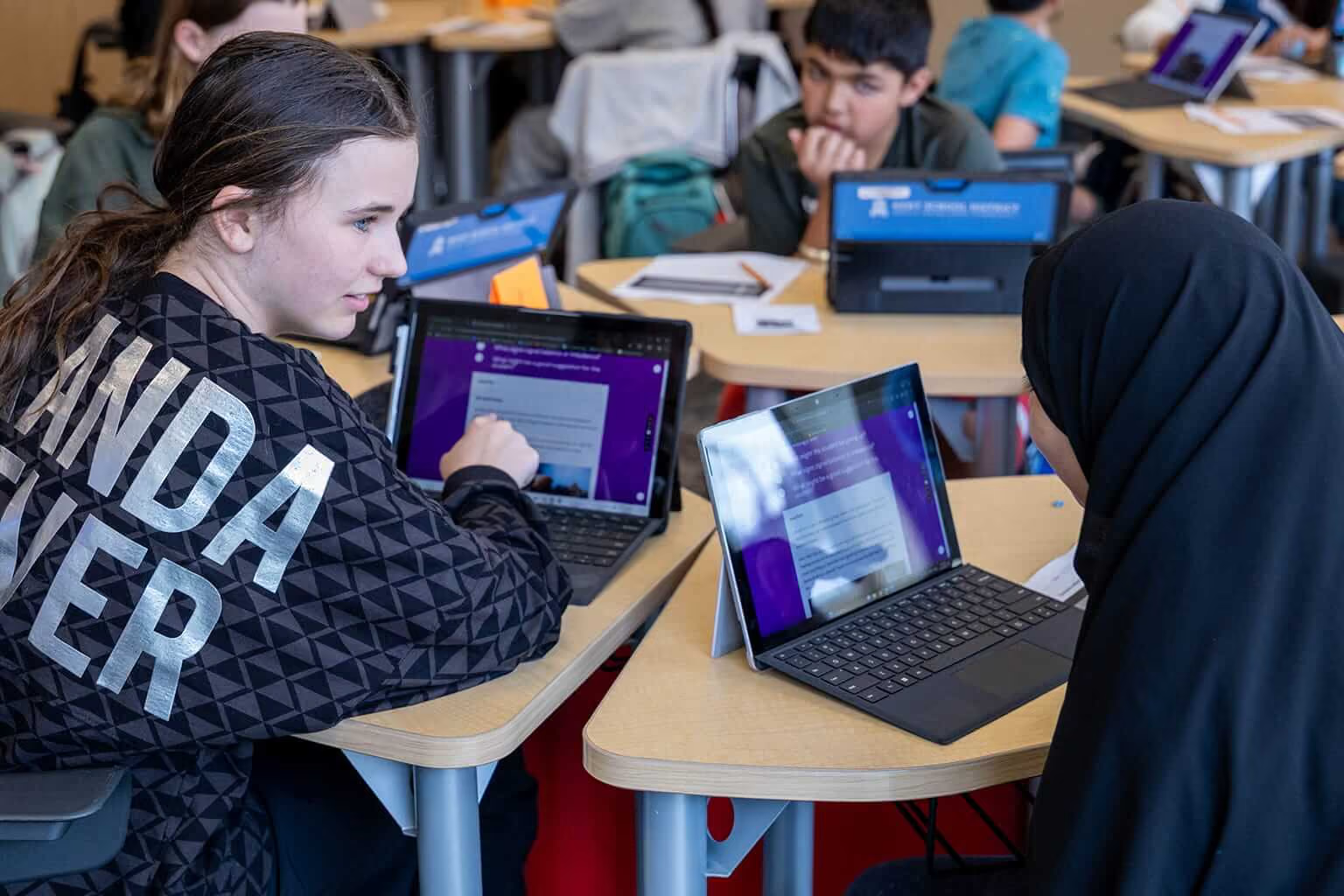
There are some moments when one‑to‑one screens make sense. For example, many of us may have learned to type, code, manage files, and build spreadsheets on a computer in elementary school or middle school, and those skills matter. Teaching certain technical competencies requires putting a screen in front of a student.
However, there isn’t the need for one‑to‑one screens across as many subjects, for as many students, for as much of the day as some schools currently do.
When we pay closer attention to how learning and development actually work, we can then make design choices accordingly.
A note on AI
Balancing technology will matter even more as AI becomes embedded within school technology.
We must prioritize learning and development over AI “splendifory,” the idea that shinier buttons automatically produce better outcomes. That’s no sure thing. Some AI‑enabled tools could hold genuine promise, so we’d like to avoid tossing out those treasures with the over‑teched, under‑helpful junk. But discernment, not novelty, has to be the guiding principle.
Finding balance
It’s hard to find balance when the pendulum is swinging hard in both directions, toward all‑tech on one end and no‑tech on the other. Still, a balanced approach seems not only prudent but necessary: not too much tech, not too little, but just right. In this scenario, “just right” is defined by what best advances learning, development, and human connection.
Some policymakers will inevitably overreach or overcorrect. But let’s resist the pendulum and instead aim for the equilibrium, advocating for and adopting policies that prioritize human skills, thoughtful technology use, and long‑term student well‑being.
If you’re interested in learning more about the balanced technology approach of Second Step programs, request a free demo or consultation.
Recent Posts

Always On but Never Connected: The Digital Divide Between Students

5 Tips to Maximize Student Outcomes Through Second Step® Program Data