
Resource Library
Thank you! Your submission has been received!
Oops! Something went wrong while submitting the form.
Showing 100 items
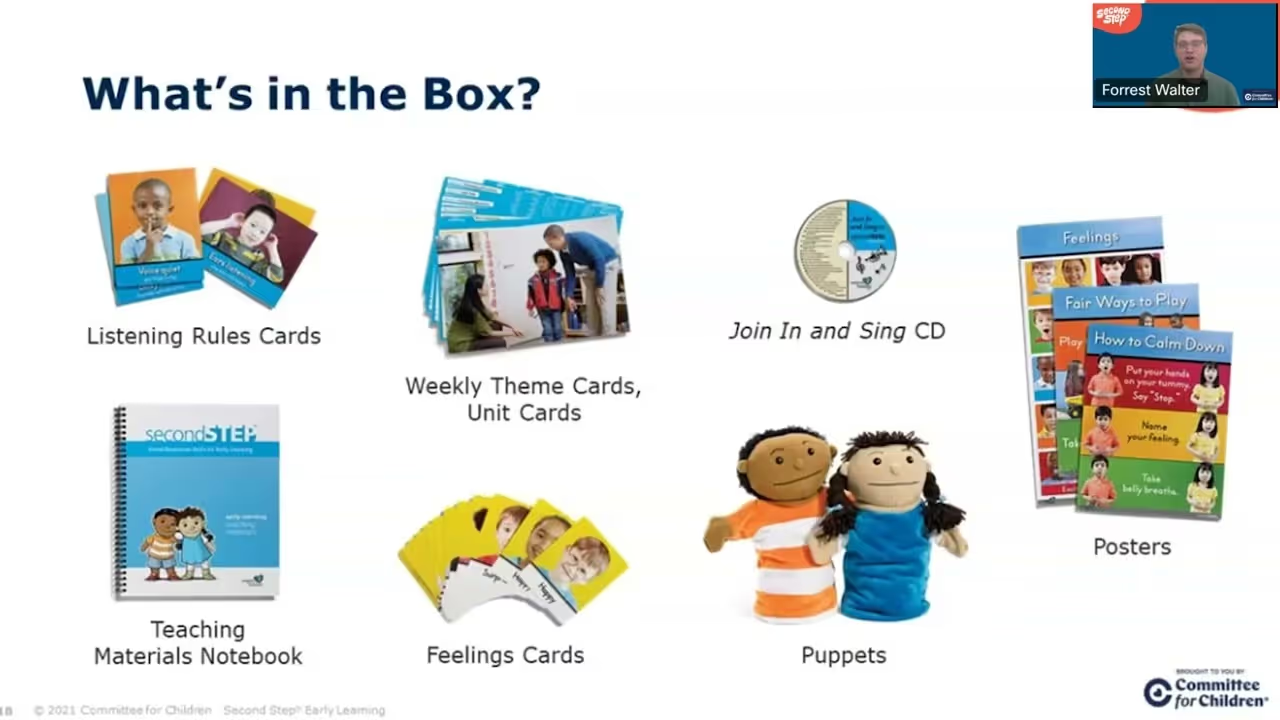
Second Step® Early Learning Demo
This webinar, hosted by Committee for Children, walks you through Second Step Early Learning. Our experts provide important tips, answer frequently asked questions, and give a short demo of the program to help plan for a successful implementation.
August 9, 2022
Webinar
Current Second Step User
Webinar
Early learning
Second Step family of programs overview
Implementation resources
No items found.
Engaging Families with Second Step® Programs
In this webinar, our experts discuss how to elevate your Second Step program through family engagement. Jordan Posamentier, vice president of Committee for Children’s Policy & Advocacy Team, shares new data about effective ways to discuss social and emotional learning with students’ families.
July 26, 2022
Webinar
Family/Caregiver
Webinar
Communication
Collaboration
Human skills
Current Second Step User
Family/Caregiver
School Leader
Making Educator Wellness a Priority
Teaching is one of the most stressful professions. That stress can affect your health, your job satisfaction, and even the quality of your teaching. However, decades of research show that when teachers feel better, they perform better. In this webinar you’ll learn some simple strategies you can use immediately to reduce stress and improve your wellness.
April 25, 2022
Webinar
Educator
Webinar
Resilience
Emotion regulation
Human skills
Current Second Step User
Educator
District Leader
School Leader
Educator Voices: Bullying Prevention with Second Step® Programs
Do you feel like you’re facing the challenges of bullying prevention alone? Take part in a conversation with other educators who are working to address bullying. They’ll discuss how to create welcoming and nurturing learning environments for all students with human skills instruction. You’ll also hear strategies and perspectives on bullying prevention from Second Step program users in a variety of settings and different roles.
November 3, 2021
Webinar
Educator
Webinar
Bullying prevention
Kindness
School climate
No items found.
Creating a Culture of Kindness: Using Research-Based Approaches to Prevent Bullying
The 2021–2022 school year will be a year like no other, with big challenges but also an opportunity to come back better than before the pandemic. This is a great time for educators to look at school culture and ask, “How can we create a culture of kindness in our schools so that all kids feel welcome and included?” There’s a large body of research on bullying behaviors and strategies schools can use to reduce bullying. We invite you to join us to learn about this research and the steps your school can take to help all kids thrive.
October 28, 2021
Webinar
Educator
Webinar
Bullying prevention
Kindness
Empathy
No items found.
Implementing Second Step Programs in a K-6 School
To effectively support students’ human skills learning, educators need human skills resources, tools, and program implementation strategies that work for their schools and communities. In this webinar, you will learn about Second Step® Elementary and Second Step® Middle School, and how to implement these programs successfully in your K-6 school.
May 17, 2021
Webinar
Current Second Step User
Webinar
Elementary school
Implementation resources
Second Step family of programs overview
No items found.
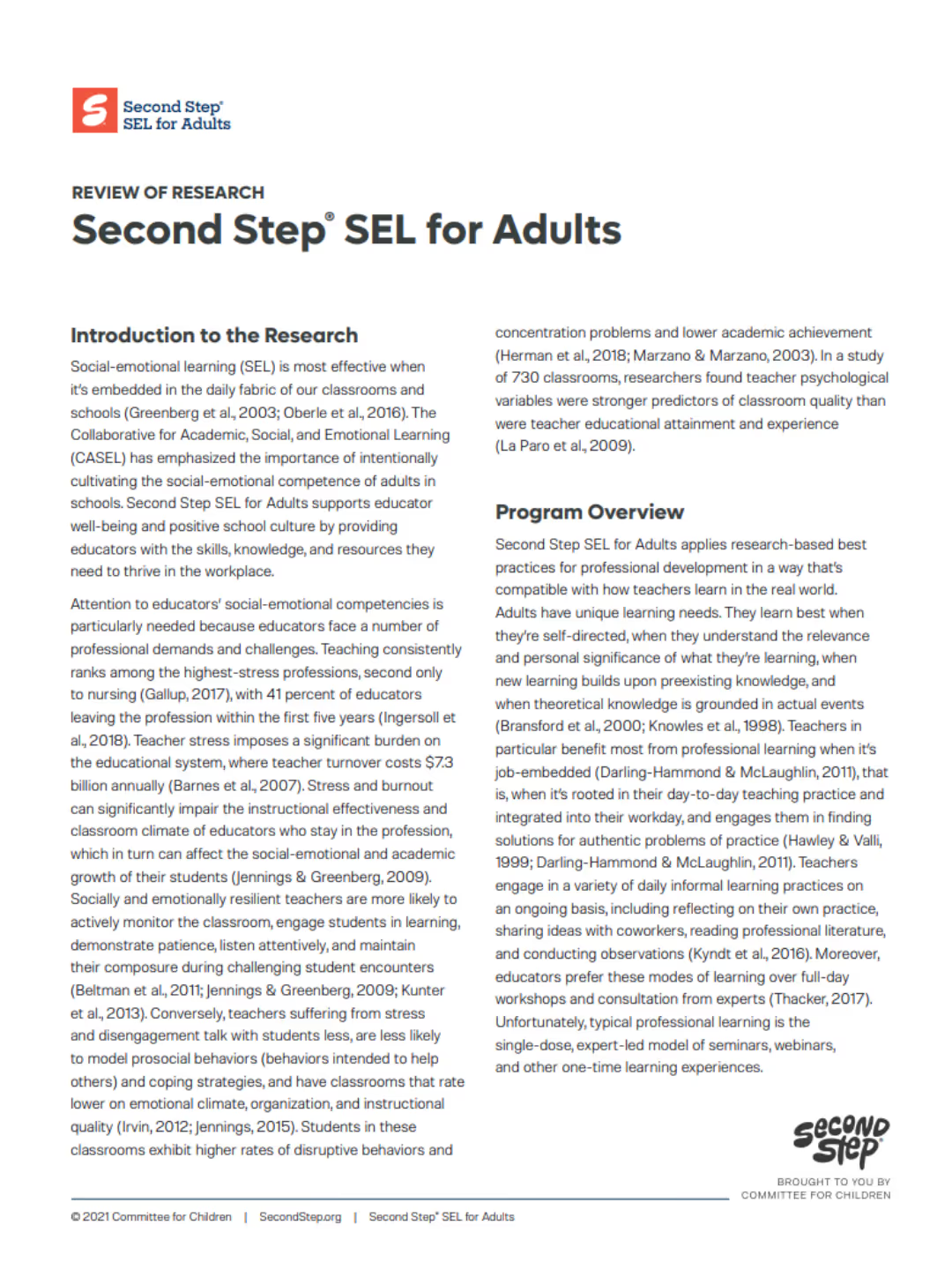
Second Step® SEL for Adults Review of Research
District Leader
Review of research
No items found.
No items found.
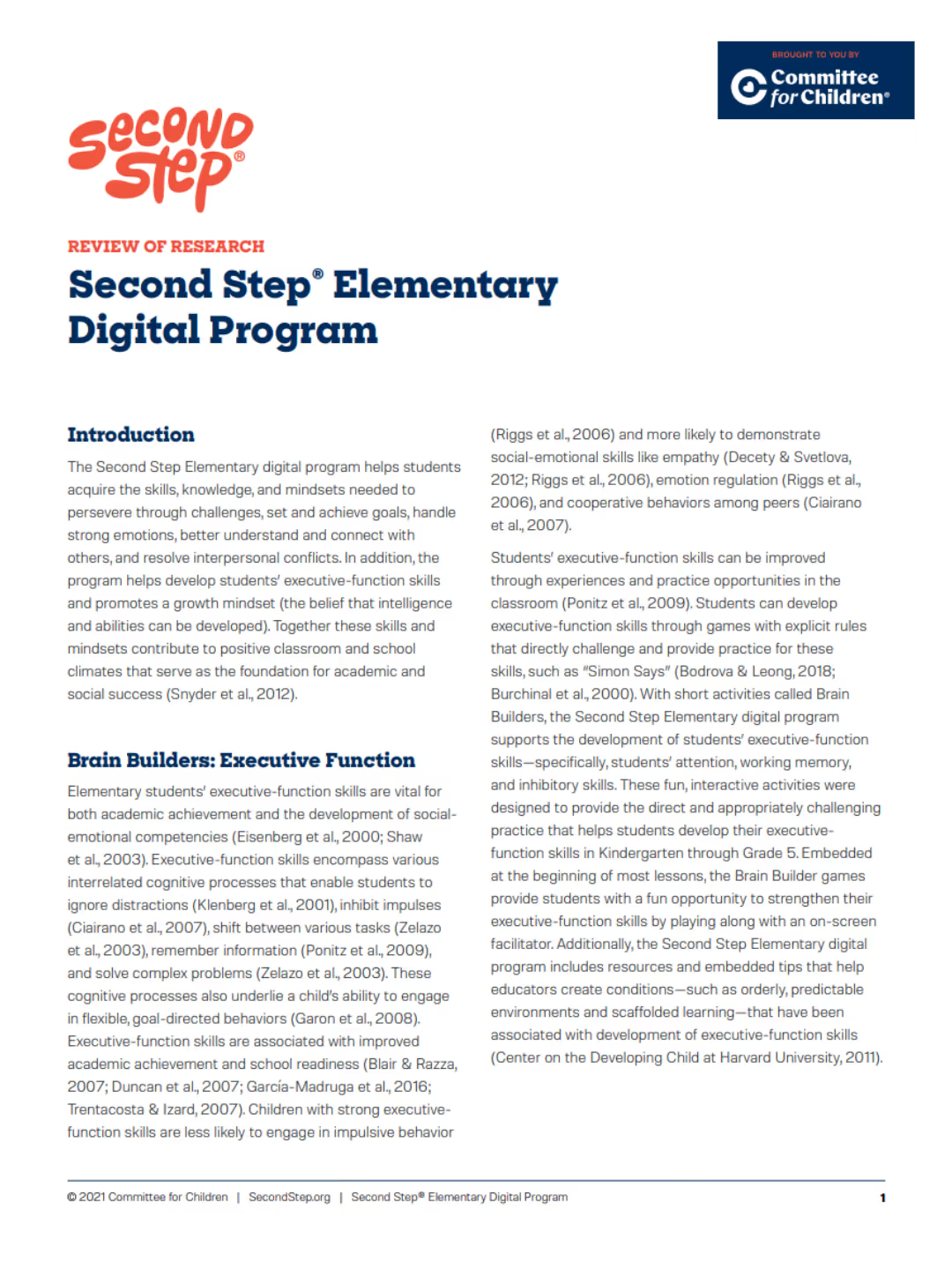
Second Step® Elementary Digital Program Review of Research
District Leader
Review of research
No items found.
No items found.